Showing posts with label komodo dragon. Show all posts

Thursday, July 1, 2010

Singapore Zoo Pioneers Breakthrough Treatment of Komodo Dragon

Singapore Zoo Pioneers Breakthrough Treatment of Komodo Dragon

Wound-healing therapy normally used on humans heals mother komodo


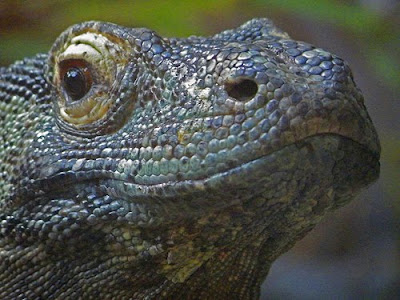
The Singapore Zoo, one of the four wildlife parks managed by Wildlife Reserves Singapore (WRS), including the first river-themed attraction River Safari, has made veterinary history by undertaking Vacuum Assisted Closure Therapy on a reptile in captivity. Yoko, one of the Zoo's three komodo dragons, recently became the first reptile to receive a breakthrough treatment commonly used to promote wound healing in humans.


Yoko, the proud mother of the Singapore Zoo's first successfully hatched Komodo dragon bred in Asia, outside of native Indonesia, had sustained a 16cm injury to her back while incubating a second batch of eggs last November. While laying her eggs in an underground burrow, Yoko wedged herself in a crevice of the cave and as a result, sustained abrasions to her dorsal or spinal region. The damaged tissue surrounding the injury started to degenerate and slough off leaving an open wound that was exposed to possible infection.


A team of experts at the Zoo's Wildlife Healthcare and Research Centre, including surgeons from the Department of Hand and Reconstructive Microsurgery and the Division of Plastic, Reconstructive and Aesthetic Surgery, National University Hospital (NUH), vets and keepers, was quickly mobilised to treat Yoko.


Said Dr Serena Oh, Assistant Director, Veterinary, WRS: "We kept infection at bay with daily manuka honey dressings and antibiotics. A major challenge was the nature of the Komodo dragon's skin. It does not have a subcutaneous layer of tissue that lies immediately below the top layer of vertebrate skin that would allow us to create a local skin flap to cover the wound. We needed a solution to generate tissue growth quickly with zero risk of infection".


After consultation with several medical experts in the region, the team decided to use the V.A.C. Therapy System from KCI. Vacuum Assisted Closure, or V.A.C. Therapy has been clinically proven to treat serious or complex wounds through the use of negative pressure. The negative pressure creates a unique wound healing environment that has been shown to promote the wound healing process, reduce edema, prepare the wound bed for closure, promote the formation of granulation tissue and remove infectious materials.


According to Dr Lee Shu Jin, Consultant, Division of Plastic, Reconstructive and Aesthetic Surgery at NUH treating Yoko, V.A.C. Therapy has been used worldwide to treat over 3 million human patients, but this was the first time it had been used on a reptile, particularly a Komodo dragon. She said: "Reptiles normally heal very slowly but we are very happy to report that Yoko made great progress in her recovery with V.A.C. Therapy. She was also eating and moving normally throughout the entire process.


Ms Fanny Lai, WRS Group CEO, said, "The successful treatment of Yoko was a result of teamwork between our veterinary and consultant expertise and the keepers. It was also made possible with our excellent clinical facilities at the Wildlife Healthcare and Research Centre. The veterinary team is responsible for the health of almost 4,000 animals at Singapore Zoo and Night Safari. Our demonstrated capabilities in wildlife medical treatment put us in the lead as a regional centre of excellence for wildlife veterinary healthcare and research in conserving global biodiversity."


As part of an on-going tripartite collaboration between the Singapore Zoo, Lisbon Zoo in Portugal and Ueno Zoo in Japan, the Singapore Zoo is expecting yet another successful Komodo dragon hatching. On 11 November last year, the Zoo collected another viable egg that was laid by Yoko. The incubation period of Komodo dragons is usually nine months. The recent viable egg collected is likely to hatch sometime in August this year.


Meanwhile, the first young Komodo dragon, which hatched on 15 November 2009, is now close to seven months old. It is approximately 50cm in length, which is five times its size at birth. Weaned on a diet of pinkies (young mice), the little dragon's diet is gradually changing to include small furred mice and strips of beef dusted with calcium.


Ming Yang loves to write about travel and adventures, zoo, animals. To know more about Singapore Zoo, Singapore Zoological Gardens, zoo animals, zoo wildlife and visit http://www.zoo.com.sg/


***
For Books on Zoo Management and more please visit
***
For regular updated Zoo News, Views, Reviews and Vacancies please visit
 Zoo News Digest on
Learn More About Zoos and Aquariums by visiting
and subscribe to the largest and longest established zoo related ezine
by clicking

'No Mirrors Involved'
Snow Leopards
Photo supplied by Peter Litherland of the


Sunday, December 27, 2009

Asia's Trade in Wildlife

Asia's Wildlife Trade


On September 14, 1998, a thin, bespectacled Malaysian named Wong Keng Liang walked off Japan Airlines Flight 12 at Mexico City International Airport. He was dressed in faded blue jeans, a light-blue jacket, and a T-shirt emblazoned with a white iguana head. George Morrison, lead agent for Special Operations, the elite, five-person undercover unit of the U.S. Fish and Wildlife Service, was there to greet him. Within seconds of his arrest, Anson (the name by which Wong is known to wildlife traffickers and wildlife law enforcement officers around the world) was whisked downstairs in handcuffs by Mexican federales, to be held in the country's largest prison, the infamous Reclusorio Norte.


To Morrison and his team, Anson Wong was the catch of a lifetime—the world's most wanted smuggler of endangered species. His arrest, involving authorities in Australia, Canada, Mexico, New Zealand, and the United States, was a hard-won victory, the culmination of a half-decade-long undercover operation still widely considered the most successful international wildlife investigation ever.

For too long in too many countries (including the U.S.), placing the word "wildlife" in front of the word "crime" had diminished its seriousness. U.S. federal prosecutors wanted Anson's conviction to show the world that wildlife smugglers are criminals. In addition to charging him under the American wildlife-trafficking law known as the Lacey Act, they indicted him for conspiracy, felony smuggling, and money laundering.


For nearly two years Anson fought extradition to the U.S., but eventually he signed plea agreements, admitting to crimes carrying a maximum penalty of 250 years in prison and a $12.5-million fine. On June 7, 2001, U.S. District Judge Martin J. Jenkins sentenced him to 71 months in U.S. federal prison (with credit for 34 months served), fined him $60,000, and banned him from selling animals to anyone in the U.S. for three years after his prison release.


If the judge thought a ban on Anson Wong would work, he was mistaken. Shortly after his arrest, Anson's wife and business partner, Cheah Bing Shee, established a new company, CBS Wildlife, which exported wildlife to the U.S. while Anson was in prison. His main company, Sungai Rusa Wildlife, continued to ship despite the ban. Now that he's free, Anson has launched a new wildlife venture, a zoo that promises to be his most audacious enterprise yet.


Numbers Game


It is almost impossible to name an animal or plant species anywhere on the planet that has not been traded—legally or illegally—for its meat, fur, skin, song, or ornamental value, as a pet, or as an ingre­dient in perfume or medicine. Every year China, the U.S., Europe, and Japan purchase billions of dollars' worth of wildlife from biologically rich parts of the world, such as Southeast Asia, emptying out parks and plundering wildlands, often newly accessible along logging roads.


The path to market typically begins when poor hunters or farmers catch animals for local traders, who pass them up the supply chain, though some traffickers—Anson Wong among them—have even dispatched their own poachers, posing as tourists. In Asia, wildlife ends up on the banquet table or in medicine shops; in Western countries, in the living rooms of exotic-animal fanciers. The economics are as easy to understand as an art auction: the rarer the item, the higher the price. Around the globe, nature is dying, and the prices of her rarest works are going up.


While no one knows exactly how large the illegal wildlife trade is, this much is certain: It's extraordinarily lucrative. Profit margins are the kind drug kingpins would kill for. Smugglers evade detection by hiding illegal wildlife in legal shipments, they bribe wildlife and customs officials, and they alter trade documents. Few are ever caught, and penalties are usually no more severe than a parking ticket. Wildlife trafficking may very well be the world's most profitable form of illegal trade, bar none.


Smugglers also exploit a loophole in the Convention on International Trade in Endangered Species of Wild Fauna and Flora (CITES). With 175 countries as members, CITES is the world's primary treaty to protect wildlife, categorized into three groups according to how endan­gered a species is perceived to be. Appendix I animals, such as tigers and orangutans, are considered so close to extinction that their commercial trade is banned. Species in Appendix II are less vulnerable and may be traded under a permit system. Those in Appendix III are protected by the national legislation of the country that added them to the list. The CITES treaty has one gaping exception: Specimens bred in captivity do not receive the same protection as their wild counterparts. CITES, after all, applies to wild life.


Proponents of captive breeding argue that it takes pressure off wild populations, decreases crime, satisfies international demand that will never go away, and puts money in the pockets of those willing to commit to "farming" wildlife. But these benefits only hold in countries with enforcement policies strong enough to deter rule breakers. In practice, smugglers establish fake breeding facilities, then claim that animals and plants poached from the wild are captive bred. Fake captive breeding is just one of the techniques Anson Wong used in running a secret front operation for one of the world's largest wildlife-smuggling syndicates.


While no one knows exactly how large the illegal wildlife trade is, this much is certain: It's extraordinarily lucrative. Profit margins are the kind drug kingpins would kill for. Smugglers evade detection by hiding illegal wildlife in legal shipments, they bribe wildlife and customs officials, and they alter trade documents. Few are ever caught, and penalties are usually no more severe than a parking ticket. Wildlife trafficking may very well be the world's most profitable form of illegal trade, bar none.


Smugglers also exploit a loophole in the Convention on International Trade in Endangered Species of Wild Fauna and Flora (CITES). With 175 countries as members, CITES is the world's primary treaty to protect wildlife, categorized into three groups according to how endan­gered a species is perceived to be. Appendix I animals, such as tigers and orangutans, are considered so close to extinction that their commercial trade is banned. Species in Appendix II are less vulnerable and may be traded under a permit system. Those in Appendix III are protected by the national legislation of the country that added them to the list. The CITES treaty has one gaping exception: Specimens bred in captivity do not receive the same protection as their wild counterparts. CITES, after all, applies to wild life.


Proponents of captive breeding argue that it takes pressure off wild populations, decreases crime, satisfies international demand that will never go away, and puts money in the pockets of those willing to commit to "farming" wildlife. But these benefits only hold in countries with enforcement policies strong enough to deter rule breakers. In practice, smugglers establish fake breeding facilities, then claim that animals and plants poached from the wild are captive bred. Fake captive breeding is just one of the techniques Anson Wong used in running a secret front operation for one of the world's largest wildlife-smuggling syndicates.


Now the world's most notorious convicted reptile trafficker is about to move in a new direction, with potentially shattering consequences for one of the most revered, charismatic—and endangered—animals on the planet: the tiger.


Operation Chameleon


Special Operations began its hunt for Anson Wong in the fall of 1993. Ops prided itself on tackling large-scale commercial traffickers. The group's work on exotic-bird trafficking had resulted in the breakup of smuggling operations around the world—involving dozens of convictions in U.S. courts—and had contributed to passage of the Wild Bird Conservation Act of 1992, which banned the import of many vulnerable bird species. Overnight, imports of macaws, African gray parrots, and other psittacines had dropped from hundreds of thousands a year to hundreds.


By the 1990s illegal reptiles were pouring into the U.S. Prices were skyrocketing—$20,000 or more for a rare tortoise or a Komodo dragon. Reptiles smuggle well: They're small (at least as babies), durable, and with cold-blooded metabolisms, can go for long periods without food or water. Valuable and portable, reptiles were the diamonds of wildlife trafficking.


Informants had been raising Anson Wong's name for years, and Ops suspected he was the global kingpin of the illegal reptile trade. Anson was already wanted in the U.S. for smuggling rare reptiles to a Florida dealer in the late 1980s. He was said to be acutely aware of his status as an outlaw. There would be no "stinging" Anson Wong, no tricking him with a onetime transaction in a hotel room or catching him personally bringing reptiles through an airport. To get him, Ops would have to come up with something clever.


Special Agent Morrison—six foot five, a lifelong hunter, the son of a lawyer—was given the lead. He and his boss, Special Agent Rick Leach, leased a unit in a business complex outside San Francisco, not far from Lawrence Livermore National Laboratory, the nuclear weapons facility. They filled their new wholesale enterprise, called Pac Rim, with the only saleable merchandise they had, a truckload of seashells and corals left over from previous investigations: fluted clamshells, spiraling Trochidae shells, hard corals, the sort of white and pink junk sold by aquarium supply stores and beachside tourist shops. They advertised their confidence items in magazines, and when legitimate orders came in, the seasoned crime fighters boxed and labeled seashell orders themselves.


As a complement to Pac Rim, Ops opened a retail business called Silver State Exotics outside Reno, Nevada. The combination gave the agents a circle of economic life—they could import animals in wholesale quantities through Pac Rim and retail what they didn't need for evidence through Silver State Exotics, giving Pac Rim the appearance of a thriving global operation (and an income).


On October 19, 1995, Morrison sent a fax to Anson's company, Sungai Rusa Wildlife, explaining that he was a wholesaler of shells and corals interested in expanding into reptiles and amphib­ians. Anson replied with a one-page price list offering low-end frogs and toads for under five dollars and house geckos for 30 cents (items known in the pet industry as trash animals), listed by their Latin names. In one case Anson used his own name for a subspecies: ansoni. Two animals on the list stood out—the Fly River turtle (also known as the pig-nosed turtle) and the frilled lizard, protected throughout their ranges in Papua New Guinea, Indonesia, and Australia. So in his first contact with Morrison, a complete stranger, Anson had offered a taste of illegal wildlife.


Soon Anson was soliciting Morrison with the planet's scarcest, most valuable Appendix I reptiles: Komodo dragons from Indonesia, tuatara from New Zealand, Chinese alligators, and Madagascan plowshare tortoises, rarest of the rare. Using a corrupt employee in the Fed­Ex facility in Phoenix, Arizona, Anson express mailed protected species—including a Southeast Asian false gharial and Madagascan radiated tortoises, both Appendix I—to fake "drop" addresses. He flew Komodos directly to Morrison from Malaysia, hidden in suitcases wheeled by his American mule, James Burroughs. He sent Madagascan radiated tortoises, their legs taped inside their shells, bundled in black socks and packed at the bottom of legal reptile shipments.


Morrison marveled at Anson's dexterity. He could broker turtles out of Peru without ever touching them. He contracted out poaching hits on a wildlife sanctuary in New Zealand. He owned a wildlife business in Vietnam. And he boasted an ability to enforce his deals using Chinese muscle.


Significantly, he exploited the CITES captive-breeding exception, claiming that wild animals he exported were captive bred. Under one ruse, Anson shipped large numbers of Indian star tortoises through Dubai, claiming they'd been bred in captivity there. When investigators checked on the facility, they found a flower shop.


Anson assured Morrison that they had nothing to fear from Malaysian authorities. Wildlife smuggling in Malaysia is policed both by customs and the Department of Wildlife and National Parks, or Perhilitan. Referring to his American courier, Anson told Morrison, "I have the second man of the customs bring him out of the airport and drive him to my office."


In one instance Anson offered Morrison 20 Timor pythons for $15,000. Morrison said he was interested but worried that the snakes would lack CITES paperwork. "They'll definitely be coming with papers," Anson said. "I will have a fall guy and he will get arrested. Plus the goods will be confiscated, and the goods will be sold to me by the department."


Then Anson offered Morrison horns of Sumatran and Javanese rhinoceroses, both forbidden Appendix I animals. He talked openly about getting shahtoosh, the "king of wool," from the Tibetan antelope. He had access to extraordinary birds, including the Rothschild's mynah, whose wild population was estimated to number fewer than 150. He bragged about his Spix's macaws, a bird now believed to be extinct in the wild, claiming he'd recently sold three. The black market rate for a Spix's macaw was $100,000. His expanding list of astonishing illegal rarities included panda skins and snow leopard pelts.


Perceiving Anson Wong as only a reptile smug­gler had been a terrible mistake, allowing him to maneuver freely across the globe. Reptiles were repulsive, repulsive was invisible, invisible was money. If Anson could deliver on his offers, cheap, legal reptiles shipped to pet stores around the world were a front for a vast, illegal wildlife-smuggling empire.


"I can get anything here from anywhere," he wrote Morrison. "It only depends on how much certain people get paid. Tell me what you want, I will weigh the risks, and tell you how much it'll set you back.


"Nothing can be done to me," he boasted. "I could sell a panda—and, nothing. As long as I'm here, I'm safe."


Finally, after five years and half a million dollars' worth of illegal trade, Morrison was ready to breach Fortress Malaysia, as he called Anson's base. He proposed that Anson partner with him in a new venture, a kind of Endangered Species, Inc., specializing in the rarest animals on the planet. "Top dollar, hard-to-find things," Anson responded. "I've put myself in that position where people will offer me things first before they go elsewhere." He was in.


Morrison suggested they start out by smuggling bear bile, an ingredient in traditional Chinese medicine. Anson agreed that there was high demand for bear bile in China and South Korea, and he said he had a client willing to pay up to a hundred dollars an ounce for the liquid. "Please remember," he wrote Morrison, "I am not selling direct—too dangerous." Instead, he would use a middleman.


Morrison said he too had a partner, who could arrange for the bile from Canada, but she wouldn't work with Anson until she met him in person. Anson was reluctant. Because of the outstanding warrant on him, he couldn't enter U.S. territory, he told Morrison, and he was leery of Canada.


"We can meet anywhere here in Asia," Anson wrote. Argentina, South Africa, Peru, France, and England were all OK too. "No New Zealand," he stipulated, "or Australia."


They settled on Mexico.


The Malaysian Phoenix


With Anson Wong's arrest that September day in 1998, the U.S. Fish and Wildlife Service accom­plished its mission, but it may have lost a war. "We focused everything on one climax," George Morrison told me. Exhausted, he left full-time undercover work. Rick Leach, the group's supervisor, retired, and soon Special Operations had all but shut its doors.


Six years later, on November 10, 2003, Anson went free. Reporters flocked to Malaysia. They parked in front of his headquarters on Penang, a tiny island off the west coast, and tried to take his photograph. He refused to speak to the press.


At the time, Malaysia was embroiled in a smuggling scandal involving western lowland gorillas, a critically endangered species. Traffickers had used Nigeria's University of Ibadan Zoological Gardens as a front to smuggle four infants, snatched from the forest in Cameroon, to Malay­sia's Taiping Zoo. The Taiping Four incident had sparked international outrage. In the midst of this commotion, Anson sat down at his computer and typed a one-line message on Vorras.net, a commercial message board frequented by international wildlife traders: "we need Nigerian primates. pls quote CnF Malaysia."


Anson was back in business.


In truth he had never really stopped. Dur­ing his imprisonment, Cheah Bing Shee continued to run the operation. Now Anson began to frequent Internet message boards, seeking reptiles from India, Madagascar, and Sudan; insects from Mozambique; and "10 tons a month" of sheep horns. He has offered to sell an array of wildlife, including Malaysian reptiles, mynah birds, parrots, and half a million dollars' worth of wild agarwood, prized for its aromatic qualities. To a request for dead birds and mammals, he replied, "We have always specimens."


Since his release he's had only one brush with the law. On March 16, 2006, Manny Esguerra, an alert Thai Airways cargo employee stationed in Manila, questioned a shipment of reptiles en route from the Philippines to Sungai Rusa Wildlife in Malaysia. The consignment lacked export permits, in violation of Philippine law. Esguerra, as required by his airline, telephoned the intended recipient, which confirmed the shipment. Esguerra referred the case to Philippine authorities. Then the Philippine supplier named in the shipping records evaporated. The seized reptiles themselves vanished before authorities had a chance to investigate further, turning up later at a remote Philippine rescue center. Local news articles presented the case as a success, but no one was arrested. The only identifiable person who could be connected to the illegal shipment was safe in Fortress Malaysia—Anson Wong.


What initially drew my attention to Anson was an offhand comment by Mike Van Nostrand, owner of Strictly Reptiles in South Florida, among the world's largest reptile import-export wholesalers and one of Anson's biggest customers. I was writing a book about Van Nostrand's past as a reptile smuggler. "Two weeks after he got out," Van Nostrand told me in the summer of 2004, "Anson offered me something he really shouldn't have." It was a Gray's monitor, a fruit-eating Philippine lizard thought to have been extinct until the late 1970s and one of the animals Anson had gone to prison for smuggling. Van Nostrand, who had done jail time himself for smuggling reptiles and wanted to avoid a repeat, was shocked. "Boy, you never quit," he replied.


In September 2006 I rented an apartment in South Florida and went to work for Strictly Reptiles. I spent three months in the warehouse sweeping floors, cleaning snake cages, and unpacking reptile shipments—including ones from Anson—working toward a single question for Van Nostrand: "Would you introduce me?" Employees repeatedly accused me of being a federal agent. They photographed me. They wrote down my license plate number. I was threatened with a baseball bat and had a .357 aimed at my head. But eventually Van Nostrand and I became friends. A few days before my lease ran out, I asked my question. "Sure," he answered. "Anson'll talk to you. He loves to talk about himself."


Inside the Fortress


Situated in the trendy Pulau Tikus ("rat island") section of Penang, Sungai Rusa Wildlife might easily be mistaken for a hair salon. No wider than a family garage and unidentified, it's one of dozens of units along a quiet strip of retail shops offering tummy reduction, skin care, and spa treatments. When I walked in on March 2, 2007, a black BMW and a windowless delivery van bearing the address of Anson's Penang-based reptile farm were parked out front. Next door was Xie Design, an interior furnishings business Anson's wife operates.


Anson shook my hand with that significant extra squeeze some men give you just before the release. He led me past stacks of live tarantulas in deli cups, scattered paperwork, and shipping boxes to his private office, a cramped, windowless room. Although he'd advertised his company on the Web as doing "U.S. $50 million to U.S. $100 million" in annual sales, the fanciest item in the room was the cell phone on his desk.


After I sat down, Anson pointed to three sets of photographs laminated in plastic and taped to his office door. "My wife put those up to remind me to ask myself if it was worth it," he said. "Beautiful, huh?"


They were evidence photos of Indian star tortoises he'd smuggled, each page stamped by the Northern District of California federal court. They may have been a reminder to Anson from his wife, but they were also a warning to every person who stepped through his door: I, Anson Wong, have run the toughest legal gantlet in the world, and I am here.


He was deceptively boyish-looking. He wore large, round glasses and had a ponytail, which was flecked with gray. At 49, his face was without stress. He had the cultured air of a successful artist, a sculptor maybe, and he spoke with a pleasant British curl to his perfect English. Behind his head was a map of the world. Behind me slept a reticulated python, the world's longest python.


Anson said he'd started in the wildlife trade in the 1980s, with a company called Exotic Skins and Alives. Back then, he said, Malaysia gave legal protection only to indigenous wildlife, so he traded freely in endangered species from around the world. Anson smiled. "Anything," he said.


I said I was writing a book about his U.S. customer Mike Van Nostrand, who had also played a cat-and-mouse game with the U.S. Fish and Wildlife Service. "You're the main guy in Asia," I said. "Mike told me that if it wasn't for Anson Wong, there would be no reptile industry in the United States."


Anson named a rival trader in Indonesia and another in Madagascar. Then he laughed and shook his head. "Well, I guess there aren't that many of us."


Wildlife is an integral part of every Asian economy, I said, and I'm interested in the line between man and nature.


"Ahhh," he said. Anson raised his arms and put his fists together. "Always in conflict."


Future Shock


"I'm building another zoo," he said, pointing to a 30-page document on his desk titled "Anson Wong, Flora and Fauna Village." "The plans were approved yesterday." I began thumbing through the architectural drawings.


Anson's partners were his wife and Michael Ooi, an internationally renowned orchid dealer. (Michael's brother Gino operates Malaysia's largest rare bird facility, Penang Bird Park.) For years the Wongs and Michael Ooi had run a zoo on Penang called Bukit Jambul Orchid, Hibiscus and Reptile Garden.


Zoos make good cover. Smugglers in control of a zoo can move endangered species with CITES paperwork, and a zoo can use its breeding program to explain the appearance of a new animal. CITES generally doesn't monitor what happens to an animal after a zoo imports it: A gorilla can be sold domestically, or if it dies (or is killed), can be cut up for meat, or parts, or even stuffed. Anson's portion of the zoo was called Bukit Jambul Reptile Sanctuary, and it had enabled him to host nature lovers and wildlife experts from around the world while he secretly smuggled rare animals through his other company.


Anson told me his new zoo would far surpass Bukit Jambul. He would still display reptiles, and he would charge visitors next to nothing to get in, but this time he expected to make a lot of money. He had a new focus: big cats. "I love tigers," he said.


"Captive breeding," Anson smiled, "that is the future."


I looked up with an adrenaline jolt. Tigers are all but extinct in the wild, with only about 4,000 left. Now Anson Wong was planning to make tigers his specialty.


There's a valuable black market for tigers. Tibetans wear tiger-skin robes; wealthy collectors display their heads; exotic restaurants sell their meat; their penis is said to be an aphrodisiac; and Chinese covet their bones for health cures, including tiger-bone wine, the "chicken soup" of Chinese medicine. Experts have put the black market value of a dead, adult male tiger at $10,000 or more. In some Asian countries, tourist attractions called tiger parks secretly operate as front operations for tiger farming—butchering captive tigers for their parts and offering a potential market for wild-tiger poachers too. (Keeping an adult tiger costs $5,000 a year in food alone, but a bullet costs only a dollar.)


Anson has a dark history with big cats. During Operation Chameleon he had asked Morrison's help to have tigers he was raising mounted for sale as trophies. He has offered to smuggle a cougar out of the U.S., and he wanted to sell Morrison an Appendix I marbled cat. After his prison release, tiger cubs he owned were found on display at a Kuala Lumpur pet store. Anson was practiced at circumventing Malaysian prohibitions on keeping tigers and other endangered species by securing "special permits"—licenses granted on the recommendation of Perhilitan, the wildlife department, to private individuals, theme parks, and zoos.


He glanced at my shoulder bag. "George Morrison recorded everything," he said, and stood up. He rapped his knuckles against his wall calendar. "I'm busy," he said, indicating forthcoming commitments: Taipei, Hong Kong, Thailand.


"I'm here this weekend," I offered.


"Weekends are for family," he replied. "We'll talk, but not this trip."


He walked me to the door. "When you're done with your book, we should talk about my story," he said.


That's when I made a mistake. I told him I'd written an article exposing a questionable agreement between the U.S. government and a British coin dealer to sell the world's most valuable—and stolen—coin and split the profit. Normally, telling an ex-felon you'd given the government a black eye was a sure bet to improve your rela­tionship. But momentarily I'd forgotten the prem­ise for Operation Chameleon: Anson and his government were friends.


Anson stared at me. "So, you're a journalist," he said, stiffening.


Apparently, he had mistaken me for a biographer. I started to reply, but he interrupted. "Journalists who uncover what people want left alone can get killed," he said, his voice very calm.


Kecik-kecik Cili Padi


One day in late December 2007, Anson's black Mercedes-Benz pulled into Penang International Airport and picked up two of Malaysia's top wildlife enforcement officials, Perhilitan's law enforcement division director, Sivananthan Elagupillay, and his boss, Deputy Director General Misliah Mohamad Basir. The officers had flown in from Kuala Lumpur for a press conference launching Flora and Fauna Village, now a joint venture between Penang's forestry department and Anson Wong and Michael Ooi's enterprise. It would be a five-acre zoo carved out of the Teluk Bahang Forest Reserve, and to help finance it, the Penang state government was contributing 700,000 ringgit (U.S. $200,000). A photograph in Malaysia's newspaper The Star showed government officials inspecting the zoo's new tiger den.


"The price will be very affordable as our aim of setting the village is also to help conserve the endangered species," Ooi told reporters.


Anson had long boasted his government influ­ence. Now he had the open support of both the Penang government and Malaysia's wildlife department. Misliah's presence was ironic. During Operation Chameleon Misliah had been the wildlife official in charge on Penang. She signed his CITES permits. Within four years of Anson's arrest, she was promoted to director of Perhilitan's law enforcement division, and by 2007 she'd been given the department's number two job.


I wondered what Misliah thought of the man who had smuggled so much endangered wildlife right under her nose.


"He is my good friend," Misliah giggled, sitting behind her desk in her spacious office at Perhilitan headquarters. She was a plump little woman, hardly more than a round head wrapped in a Muslim's white tudung scarf. She was swaddled in a sky blue shawl over a baju kurung, a long blouse and sarong, and wore petite brown sandals. Her voice was honestly the sweetest I'd ever heard.


I'd been warned that Misliah had two prejudices: She disliked Americans, and she thought all Americans were obsessed with Anson Wong.


"You know," I said, "I'm an American. And when it comes to Malaysia and wildlife, all we ever hear about in the U.S. is one story."


"What is that?" she asked pleasantly.


I smiled. "Anson Wong."


Misliah giggled. She had joined Perhilitan in the early 1980s, about the same time Anson started in the reptile business, and had been posted to Penang for much of her career. "I spent more than ten years inspecting his shipments," she said. I tried to picture Misliah, crowbar in hand, prying open Anson's wooden shipping crates, reaching into boxes crammed with biting Tokay geckos, venomous mangrove snakes, and other discouragingly aggressive animals Anson called cover species, because he put them on top of illegal animal shipments.


She hadn't known much about reptiles when she started, she said, but now she did. "Everything I know about them I learned from opening Anson's boxes." Misliah turned to look at her bookshelves. Though she hadn't seen him much since her move to Kuala Lumpur, she still borrowed Anson's books on bird identification from time to time. When her officers can't identify an animal, she tells her people to call Anson. "He's better than anyone in the department at identifying wildlife, so why not go to him," she said. "He's the most knowledgeable in the country."


I noticed that Misliah rarely blinks.


"He is very smart," she continued, explaining that Anson does all his deals over the phone. "In Malaysia you must catch someone with the animals. Not like the U.S. with the Lacey Act," she said contemptuously.


The Lacey Act makes it a federal crime to violate wildlife laws, even those of a foreign country, and a wildlife smuggler doesn't have to be caught in possession of an animal to face felony prosecution. Misliah considers Anson's conviction under the Lacey Act illegitimate and has publicly accused the U.S. Fish and Wildlife Service of framing him.


"They said he had Komodos, but he never handles animals himself—he has runners everywhere," Misliah said. "When he was in prison, Anson wrote me letters. He bribed his way. They treated him like a king!" She explained that his business had gone down while he was in prison and his wife was in charge. "But," she said, "now it is going up."


Malaysia's second highest wildlife law enforcement officer speaks of her country's most notorious illegal trafficker like a doting aunt.


"People say, 'How can you give him his license?' " A smile wreathed Misliah's face. "He was a very bad boy, but if we don't give him a license, he would just do it anyway." This way, she said, they could keep their eye on him.


To this day Misliah vouches for Anson. "Anson Wong has carried out his business legally and complying [sic] the needs and requirements under the domestic law. He and his business in peninsular Malaysia have been monitored closely by this department," her office asserted in a written statement to the press in 2008.


She was also in favor of legalized tiger and bear-bile farming. "Why not?" she asked me.


Misliah Mohamad Basir, so inconspicuous, seemingly so benign, is one of the most powerful wildlife decision-makers on the planet. On her watch Malaysia has become a global trafficking hub.


I kept coming back to how delightful she seemed in person. "Isn't Misliah the sweetest little woman you ever met?" I asked a senior Perhilitan officer.


The officer studied me for a moment, then smiled. "In Perhilitan we have a saying about her: Kecik-kecik cili padi."


A park ranger standing nearby nodded.


"The smallest chilies are always the hottest."


Sheriff Wanted


Misliah had mentioned an adversary named Chris Shepherd, an intrepid investigator who has drawn attention to black market wildlife operations throughout Southeast Asia. "He says we're just a transit country," Misliah told me, with obvious disdain. "He says we do nothing to stop smuggling."


Shepherd, a Canadian, works for TRAFFIC, the trade-monitoring arm of the World Wildlife Fund and the International Union for Conservation of Nature. Based in Cambridge, England, with offices around the world, TRAFFIC's investigators monitor crime and pass what they learn to host country law enforcement agencies. Shepherd is the lead investigator in the Southeast Asia headquarters, in Petaling Jaya, Malaysia. Over the past decade he's published a mountain of reports covering illegal trade in bear parts, elephants, civets, Indonesia's laughing thrushes, the Indian star tortoise, the serow, the Roti Island snake-necked turtle, the Sumatran tiger, and more. He is widely considered among the region's best investigators, and his reports benefit conservationists and law enforcement around the world.


When I visited Shepherd and asked if he would show me his Anson Wong file, he looked at me blankly. He opened a file cabinet and removed a thin folder from a half-empty drawer. After scanning a few pages, he shook his head.


Not one NGO investigator I met in Southeast Asia, Shepherd included, had ever laid eyes on Anson Wong. Time and again I found experts eager to take me to see atrocities: bear cubs in Vietnam dipped in boiling water to intensify the "life force" in bear-paw soup, orangutans chained in the backyards of Indonesian generals, endangered birds openly for sale in Asian markets. But when I asked what connections could be made between a scene and a criminal organization, no one had a single example of a syndicate being mapped out the way one would expect to see on any low-budget cop show.


"Their brains all work like a camera," George Morrison told me. NGOs, their donors, and the media tend to focus on wildlife crimes they can see, while multinational criminal syndicates operate hidden behind thickets of corporate records, CITES permits, and trade data.


NGO staff have many demands on their time: fund-raising and species reports, press interviews, market surveys, donor meetings, and bill paying. NGOs are not police. They have no enforcement authority, their employees depend for their visas on the wildlife officials they might investigate, and if NGOs push too hard, they invite trouble. In 2008, TRAFFIC issued a report on the Sumatran trade in tiger parts and urged Indonesia to increase its enforcement. In response, Indonesia froze TRAFFIC's activities, a move tantamount to expulsion. Tonny Soehartono, the Ministry of Forestry official responsible for Indonesia's action, explained his reasoning: "TRAFFIC attacked my country."


>>>READ FULL ARTICLE>>>

Friday, December 11, 2009

Monday, December 7, 2009

Singapore Zoo breeds rare Komodo dragon


Photo By: http://www.flickr.com/photos/andy_bernay-roman/

Singapore Zoo has successfully bred the highly-endangered Komodo dragon, officials said on Monday, reporting that the rare baby reptile was in good health.

The 40-centimetre (16-inch) hatchling is the first Komodo dragon born in an Asian zoo outside Indonesia, the native home of the world's largest lizard species, a spokeswoman told AFP.

In a press statement, assistant director of zoology Biswajit Guha said the hatching of the Komodo dragon, whose gender has not been confirmed, "is one of the most significant moments" for the zoo, one of Singapore's top attractions.

The breeding of Komodo dragons in captivity "is fraught with difficulties due to incompatible pairings, dearth of experience in egg incubation and over-representation of males in zoos," he said.


Photo By: http://www.flickr.com/photos/29823271@N05/

The reptiles are considered one of Indonesia's national treasures. Komodos can grow up to three metres (10 feet) in length and weigh up to 140 kilograms (310 pounds).

They are listed as "vulnerable" in the International Union for Conservation of Nature's Red List of Threatened Species.

Only 3,000 of the poisonous lizards, native to

>>>READ FULL ARTICLE>>>

Thursday, September 3, 2009

Komodo Dragon Update

Photo by: http://www.flickr.com/photos/vmos/


I don't know how many of you have been following the Komodo Dragon story in Zoo News Digest.
I did do an update of the situation as I knew it and published this on HubPages on the 27th August. You can read that here:

Komodo Dragon Problems

Today I had an email from the CBSG (who I had referred to in the hub) and here is their statement:

CBSG would like to clarify our position with respect to the current proposed removal of komodo monitors from Flores . In 1995 CBSG facilitated a Population and Habitat Viability Assessment (PHVA) workshop in Bogor , Indonesia , attended by 44 biologists, managers and other stakeholders. The PHVA was designed to assess the status of both wild and captive komodo populations and, with the assistance of population modeling, to develop recommendations for management and conservation both in situ and ex situ. Recommendations for captive management included regional and global coordination and concerted efforts to breed unrepresented wild-caught individuals already in captivity, but did not recommend the capture of additional komodos for captive breeding at that time.

Modeling of the Wae Woul population on Flores indicated that the population could withstand the removal of 10 animals (5 males, 5 females) given the model assumptions. However, this workshop analysis was conducted almost 15 years ago and even at that time it was recognized that data for this population were highly unreliable (e.g., the model assumed 100 individuals with stable population growth) and that the model likely underestimated threats and extinction risk to the population. PHVA participants urgently recommended field studies to determine the size, status and threats of this population to allow for the development of better population models.

CBSG has offered our assistance to Indonesia to conduct an assessment of the current situation. We have offered to facilitate a workshop that incorporates all available new data to evaluate the current population status of the wild and captive populations of komodo monitors in Indonesia, to develop a more reliable population model given new data, and to determine the potential impacts of the proposed capture of komodos from Flores on both populations, as well as the impacts of other potential management actions.

Sunday, August 16, 2009

Zoo News Digest 11th - 16th August 2009 (Zoo News 612)

Zoo News Digest 11th - 16th August 2009 (Zoo News 612)http://zoonewsdigest.com/


http://zoonewsdigest.blogspot.com/


Peter Dickinson
peterd482001@yahoo.co.uk


Dear Colleagues,

There were several links to the lion cubs being born in London Zoo. The one I chose had some especially nice photographs but also one of the most interesting headings: "First Lion Cubs Born at London Zoo in Ten Years". The article does not elaborate but gives a suggestion that breeding lions must be quite difficult to do. I would like to have seen more of a mention of the fact that London Zoo with their deliberate and responsible conservation attitude has purposefully not bred lions for ten years in lines with established protocols. These lion cubs have their future mapped out. They will never be sold. They will be moved to other collections and paired in accordance with the recommendations of the species coordinator. So different from some other collections, for instance Sri Racha Tiger Zoo, who produce cubs simply so they have them available for hand rearing for photography sessions. I keep trying to impress on people that not breeding is often more important than breeding. It is an uphill struggle. Note too that the London Zoo cubs are MOTHER reared and not pulled for some pitiful excuse.


The Creationism Controversy has been resurrected once again. As a non-believer I would be very interested in seeing such an exhibition within a zoo. In fact I would go out of my way to visit such a zoo because I have have an open mind and like to see different things. In spite of being open minded I would take a lot of convincing....and then I reckon it would fail.


Lucknow Zoo gets this weeks award for NON contribution to conservation. Utter stupidity.


The Komodo situation seems to be getting even more confusing. I have yet to see even a hint of an argument that is making any sense. There is though news now that the transfer of animals from the islands will be cancelled. I find it slightly worrying that the four animals at Bali Marine and Safari Park are to be returned. It would appear that removal did not recieve the approval of officialdom in the first place. I do hope that somebody does some serious work before re-introduction.


Good news (I think) on the Chiang Mai Panda. There was a photo of it meeting the two year old girl who won the 'name the panda' competition. The girl won a million baht, a car and a trip to China. Meanwhile the panda looked well, much bigger and...yet again in the arms of a carer. I wonder if it has ever met its mother. I am slowly developing this theory about the difficulties of panda breeding. It is because they are pulled at birth and lose out on something vital.

I did like the Penguin in a wetsuit story. Having been faced with a similar dilemma before I can vouch for the fact that penguins do get sunburn.


Visit my webpages at:
http://hubpages.com/profile/Peter+Dickinson


I keep recommending Hubpages. Within an hour you could have your own webpage earning you a small passive income. Quick, easy to do and totally free to set up. No catch whatsoever. You could be up and running within the hour.

Read how with my "Quick Guide to Hub Construction." http://ewerl.com/Ua92gJ

I truly believe it will be worth your while.

This Weeks Books of Interest to the Zoo Professional
http://moourl.com/6rk1w

or visit the Zoo Professionals Book Store for more:


On with the links:

Mother's pride: First lion cubs born at London Zoo in 10 years make their debut
Two rare lion cubs who were born at London Zoo took their first steps in their new enclosure today, as their mother looked on with pride.The 10-week-old un-named cats are the son and daughter of Lucifer, six, and Abi, 10, who was the last Asian lion to be born at the zoo.Malcolm Fitzpatrick, curator of mammals at ZSL London Zoo, said the little lions have already started to form their own personalities
http://www.dailymail.co.uk/news/article-1206327/Mothers-pride-First-lion-cubs-born-London-Zoo-10-years-make-debut.html


Conservation programme launched for 70 critically endangered species
The Central Zoo Authority has initiated a coordinated conservation breeding programme for 70 critically endangered species in Indian zoos, an official statement Saturday said.
"The Central Zoo Authority has initiated a planned coordinated conservation breeding programme for critically endangered species in Indian zoos. Around 70 such wild animal species have been taken up under the programme," a statement of the

http://www.newkerala.com/nkfullnews-1-93194.html


First bees, now bats are disappearing. What's next?
Look at these two pictures. Both are endangered species. But one looks cute and cuddly, and one – doesn't.So, naturally, The U.S. Department of Interior is focusing on the polar bear.Don’t get me wrong, I like polar bears as much as the next guy. I don’t want to see them go extinct. Their extinction will mean a significant change of lifestyle for several northern peoples. But, thanks to Global Warming, it is likely that – except for zoos – polar bears are going to go the way of the dodo.But polar bears don’t directly impact our environment. Bats do. And the bat extinction that appears imminent is not getting anywhere near the attention, or research dollars, that it needs.Last year, it was reported that bats in the Northeast were dropping like flies due to a mysterious illness known as “white-nose syndrome.” If you were one of the millions who put their heads under the covers and hoped problems like this would go away, this is your wake-up call: It did not go away, it has spread.Over the past year, white-nose syndrome has spread to New Jersey, Virginia, and West Virginia, killing hundreds of thousands of bats. Kentucky, Tennessee and Northern Alabama hold some of the largest colonies of hibernating bats in the world. If/when the disease spreads
http://www.examiner.com/x-17373-Phoenix-Signs-of-the-Times-Examiner~y2009m8d14-First-bees-now-bats-are-disappearing-Whats-next


Polar bear project moves forward
Plans to move the only polar bear in a UK zoo to a new home in the Highlands could be completed by the autumn.Mercedes has been at Edinburgh Zoo since 1984 after being rescued from Canada where she was due to be shot. In June, a campaign was launched to raise £75,000 to create a new enclosure for her at the Highland Wildlife Park at Kincraig. The appeal has so far raised £48,000, including an individual donation of £10,000. Mercedes has been preparing for her move to the Highlands by familiarising herself with a new transport crate that will be used to take her on the journey. Since the crate was placed at her enclosure a couple of months ago, keepers have been working to make her feel comfortable in it. 'Positive reinforcement'Alison Maclean, head keeper of carnivores at the zoo, said: "It is quite risky to sedate a large mammal so we have been training Mercedes to walk into the transport crate. "We've been doing this using positive
http://news.bbc.co.uk/2/hi/uk_news/scotland/edinburgh_and_east/8202072.stm


Zoo, forest dept in line of fire
The theft of the eight Common Marmosets from Alipore zoo has caused much flurry in Delhi too. While the Central Zoo Authority (CZA), which is the umbrella body that sets guidelines for zoos in the country, has shot off a grim letter to the state forest department and the Alipore zoo authorities, seeking an explanation, wildlife activists have decided to inquire into the "woeful" incident on their own. In the letter, CZA has demanded separate explanations from the state and the Alipore zoo authorities about the "reported theft" of the marmosets. The letter also mentions a deadline, within which time both the state and
http://timesofindia.indiatimes.com/news/city/kolkata-/Zoo-forest-dept-in-line-of-fire/articleshow/4879525.cms


Zoo director suspended over theft of monkeys
The countrywide furore over the theft of eight rare Brazilian monkeys from Alipore zoo led to the suspension of its director, S K Chaudhuri, on Monday. Two security guards have been arrested and the state government and the zoo authorities showcaused by the Central Zoo Authority of India (CZA). The detective department took over the case on Monday even as CZA sent the government a notice saying it was “certain of an insider hand”. After preliminary investigation, police believe the gang had negotiated with a buyer before carrying out the theft. “It is much easier for the thieves to have a specific buyer rather than go around carrying the animals
http://timesofindia.indiatimes.com/news/city/kolkata-/Zoo-director-suspended-over-theft-of-monkeys/articleshow/4879728.cms


Zoo turns to TDC for funds, lest it close
A decision to close The Zoo Northwest Florida could be made in coming weeks if the Santa Rosa Tourist Development Council does not decide to contribute funding to the struggling facility.Representatives from The Zoo attended Monday’s Santa Rosa County Commission meeting in hopes the board would approve a $125,000 contribution to the facility, which has struggled financially for years. The contribution would have matched the amount the board appropriated to The Zoo last year.Instead, commissioners decided against continuing its support for The Zoo and as an alternative voted to recommend the Santa Rosa Tourist
http://www.nwfdailynews.com/news/turns-19588-close-zoo.html


Newborn elephant suffers setback
A baby elephant, whose mother was the first elephant to conceive via artificial insemination at Twycross Zoo, has suffered a setback.A press conference to show off the elephant, who was born on Thursday at the Leicestershire zoo, has been cancelled as he has become unwell. The 100kg (220lb) elephant is being closely supervised by vets but is not thought to be in a serious condition. Staff have said he just needs more time alone with mother Noorjahan. Noorjahan was inseminated from a bull elephant based at Whipsnade Wildlife Park in Bedfordshire. The procedure was carried out artificially as moving elephants between zoos for mating can
http://news.bbc.co.uk/2/hi/uk_news/england/leicestershire/8193792.stm


Mayoral Candidate Mary Falling Wants Creationism Exhibit
A mayoral candidate has resurrected a controversy over Creationism at the Tulsa Zoo. A push to exhibit the Christian story of creation at the Tulsa Zoo failed four years ago. Republican candidate for Tulsa mayor, Anna Falling, is bringing the issue front and center.It's the same exhibit and the same arguments, but now it is given from the bully pulpit of a candidate running for mayor."Some may ask why this issue during a Mayoral campaign? And I say why not?" said candidate Anna Falling.For Anna Falling, the road to city hall runs through the Tulsa Zoo. She's made her Christianity central to her platform and now the exhibit depicting the Christian story of Creationism is her first campaign promise."Today we are announcing that God will be glorified in this city. He shall not be shunned. Upon our election, we hereby commit to honoring Him in all ways that He has been dishonored," said Anna Falling.Falling says God was dishonored four years ago, when the Tulsa Parks Board rejected an exhibit which borrows heavily from the
http://www.newson6.com/Global/story.asp?S=10888260


'Alien scene' of tadpoles' feast
"Alien-like" scenes of tadpoles feasting on eggs emerging from their mother have been caught on camera.The footage marks the success of a captive breeding programme for the critically endangered mountain chicken frog, one of the world's largest frogs. In April, 50 of the amphibian giants were airlifted from Montserrat after a deadly fungus swept through the island, devastating the population. Now several breeding programmes are under way to save the frogs. Once numbers have been boosted in captivity, researchers hope to reintroduce the frogs back into the wild within the next two years. Bizarre sightThe remarkable footage was recorded at the Durrell Wildlife Conservation Trust, in Jersey, which took in 12 of the rescued frogs. Twenty-six others went to Parken Zoo in Sweden, and 12 are now housed in ZSL London Zoo.So far, four pairs of mountain chicken frogs have started to breed - which could result in hundreds of frogs. And this has given researchers an insight into the way that these unusual amphibians care for their offspring. Professor John Fa, director of Durrell, said: "Mountain chickens have very peculiar breeding habits because they form foam nests in burrows in the ground." The females lay their eggs in these nests, which eventually hatch into tadpoles. But as the nests are underground, food is scarce - so the frogs need to find a way to provide nutrition for their young. Professor Fa explained: "In the case of mountain chickens, we have discovered that the female comes into the nest and starts laying a string of infertile eggs.The tadpoles feast on the unfertilised eggs "We thought that the eggs would come out and drop to the bottom of the nest and then the tadpoles would start eating them. But the footage shows about 40 tadpoles congregating around the female and eating the eggs as they come out of the
http://news.bbc.co.uk/2/hi/science/nature/8185125.stm


Gabonese Orphan gorillas set free on an island
Six young gorillas, rescued from the illegal bush meat trade, have begun new independent lives on a lagoon island just outside LoangoNational Park in Gabon.Staff at the Société de Conservation et Développement (SCD) are celebrating after announcing the successful transfer of the six juvenile western lowland gorillas (a species deemed critically endangered on the International Union for Conservation of Nature’s Red List (IUCN)) onto
http://www.greatapeproject.org/en-US/noticias/Show/2245,gabonese-orphan-gorillas-set-free-on-an-island


Brookfield Zoo Gets A New Elephant
Joyce, 26, is a busybody who loves to play in the mud, according to her handlers.
http://www.huffingtonpost.com/2009/08/10/brookfield-zoo-gets-a-new_n_255980.html


March of the Penguins
Ready ... Set ... Waddle!In what's become an annual tradition at the San Francisco Zoo, four adolescent Magellanic penguins will graduate Wednesday from the equivalent of avian finishing school with a parade from their classroom to the 54-member penguin colony on Penguin Island.Born earlier this year, the three adolescent females and one young male will become the newest members of the largest, most prolific Magellanic penguin colony in captivity.During their summer stay at the zoo's Avian Conservation Center, the baby penguins learned to swim, eat herring from keepers' hands and socialize with
http://www.sfgate.com/cgi-bin/blogs/cityinsider/detail?entry_id=45237


The End of the Northern White Rhino
The white rhino is the second largest land mammal, and as a species, it is the only rhinoceros species that isn’t considered endangered or critically endangered by IUCN. That said, only one subspecies of white rhino has relatively healthy numbers. That would be the subspecies known as the southern white rhinoceros, which has an estimated population of over 17,000 individuals. Its range is in southern Africa.The other subspecies is not so well-off. Indeed, it might be safe to say that this subspecies is functionally extinct. The other subspecies is the northern white rhinoceros, which has (or had) a range in Central and East Africa.The best estimate of the population of the northern white rhinoceros is 8 in captivity and 4 in the wild. Now, take this with a caveat, because those four wild white rhinos haven’t been seen since 2006. Those four were living in Garamba National Park in the Democratic Park of Congo, which is not the
http://retrieverman.wordpress.com/2009/08/12/the-end-of-the-northern-white-rhino/


More than 350 species, including world's smallest deer, discovered in Himalayas in past decade
The world's smallest deer, a flying frog and catfish that stick to rocks — as well as more than 350 other species — have been discovered over the past decade in the Himalayas, making it one of the world's most biologically rich regions, an environmental group said Monday.But researchers warn that the effects of climate change, as well as development, threaten the diverse habitat that supports these species."This enormous cultural and biological diversity underscores the fragile nature of an environment which risks being lost forever unless the impacts of climate change are reversed," said Tariq Aziz, the leader of the World Wildlife Fund's Living Himalayas Initiative, a regional conservation program that covers India, Nepal and Bhutan.The WWF is calling on the countries to develop a conservation plan for the region — which also includes parts of Myanmar and Tibet — and for governments to give local communities
http://www.dailypress.com/news/world/sns-ap-as-himalayas-new-species,0,6655259.story


Raid leaves zoo with £2,500 bill
A ZOO is out of pocket by more than £2,500 after a break-in.Thieves snipped their way through the perimeter fence of Shepreth Wildlife Park and headed straight for the dodgems, which they drilled for around
http://www.cambridge-news.co.uk/cn_news_home/DisplayArticle.asp?ID=441024


World's Oldest Polar Bear Dies At Indy Zoo
The world's oldest-known polar bear died Wednesday at the Indianapolis Zoo at the age of 35.Tahtsa, the zoo's smaller polar bear, was euthanized Wednesday morning after complications of aging left her no longer able to stand, zoo officials said.Tahtsa was born in 1974 at the Denver Zoo, and spent 30 years at the Louisville Zoo, before coming
http://www.theindychannel.com/news/20374021/detail.html


Jellyfish explosion batters Monterey Bay Aquarium's plumbing
A swarm of jellyfish are causing plumbing problems at the Monterey Bay Aquarium. Hundreds of thousands of Chrysaora jellyfish feeding in the bay waters Monday damaged a filter screen on the aquarium's water intakes, said Eric Quamen the aquarium's facilities systems supervisor. "From an operations standpoint, it's a big deal. From the aquarium standpoint, it's a minor inconvenience," Quamen said. "The public would never notice." A four-person dive team spent part of Tuesday repairing the damaged screen on the end of the quarter-mile-long intake system, he said. The pipes pump about 2,000 gallons of water per minute from the bay into the aquarium for the exhibit tanks. Quamen said the screens on the ends of the pipes are designed to act as filters, but there has been a recent explosion in the number of jellyfish
http://www.montereyherald.com/ci_13043129?source=rss


Indian Zoo Breeds Endangered White Tigers
India’s Lucknow Zoo in Uttar Pradesh has initiated a program to breed white tigers and to take them off on the endangered list. So tiger Aryan and tigress Sona are being tended with utmost care. [Renu Singh, Director, Lucknow Zoo]:"As you know in India, the population of tigers has reduced. They are a highly endangered species, especially the white tigers. White tigers are not found in the wild (except the Rewa region in Madhya Pradesh). They can only be found in zoological gardens. Our zoo's objective is to breed these
http://english.ntdtv.com/ntdtv_en/ns_asia/2009-08-11/820839445490.html


Minister to form team to study komodo dragon transfer plan
The forestry ministry will set up a team of experts to study its plan to transfer 10 komodo dragons to Bali, a spokesman said.The formation of the team was recommended by a meeting of various stakeholders in the matter, chaired by Forestry Minister MS Kaban on Wednesday (Aug 12), the ministry`s information officer, Masyhud, said in a press statement on Thursday. Present at the coordinating meeting were representatives of the East Nusa Tenggara (NTT) administration, the Environmental Affairs Ministry, the Indonesian Safari Park, the Tourism and Culture Ministry, the West Manggara District Head, the Indonesian Institute of Sciences (LIPI) officials, the Bogor Institute of Agriculture (IPB) and the University of Gadjah Mada.The meeting recommended the setting up of the study team to formulate preventive measures related to the forestry ministry`s decree issued on May 13, 2009 regarding the plan to move 10 komodo dragons to the Indonesian Safari Park located in Serongga Kelod, Gianyar subdistrict, Bali Province. The transfer was aimed at promoting komodo dragon genetic purification.The plan is in line with the demand of the International Union for Conservation of Nature and Natural Resources (IUCN) which recommends a studbook system of genetic purification for endangered species.IUCN recommends a national studbook keeper on komodo dragons in Flores because the habitat of komodo dragons is not in Flores, but on Rinca and Komodo Islands, East Nusa Tenggara (NTT) which are part of the Komodo National park (TNK). Flores is not part of the TNK. Komodo dragons (varanus komodoensis) are found in Komodo Isl
http://www.antara.co.id/en/news/1250162769/minister-to-form-team-to-study-komodo-dragon-transfer-plan


transfer of 10 komodo to bali eventually canceled
Plan the transfer of 10 komodo from Komodo Island Flores to Bali eventually canceled. That said, the Governor of East Nusa Tenggara (NTT) Frans lebu Raya said that the Minister of Forestry MS Kaban agree not to do so.“Basically forrest ministry understand action NTT rejection from the community to move as many as 10 tails Komodo to Bali,” said Governor dust Raya in Kupang, Wednesday (5 / 8). According to the
http://daydaily.com/2009/08/15/transfer-of-10-komodo-to-bali-eventually-canceled/comment-page-1/#comment-326


VISA'S ZOO AND AQUARIUM ADS MISLEAD ABOUT ITS PHILANTHROPY
Recently, as part of its GO global advertising campaign, Visa ran an ad showing a father taking his daughter to a public aquarium. The commercial was very well done and should have great appeal to young families with children, especially those who regularly visit zoos and aquariums. The tag line asks "When was the last time you took your daughter to an aquarium on a Tuesday?" There are many branding messages implied by Visa being associated with a family visit to a public aquarium. The most prominent message is "Visa enables your visit." Visa wants to be thought of as synonymous with a visit to a public animal attraction. There is a very good reason for Visa doing this as a component of their global ad campaign. Each year more than 200 million Americans visit animal attractions. Worldwide attendance is close to 800 million. The image of a parent taking their child to an aquarium is very positive, and there are a lot of good connotations associated with this industry. Today's animal attractions in the United States are associated with conservation, wildlife preservation, environmental education, and the overall "green" image every company desires. There are many brands that take an active role working with animal attractions
http://www.american-reporter.com/3,746W/76.html


Vulture Restaurants: Serving Up Clean Carcasses, Free of Charge
For the small number of vulture lovers the world over, good news comes this summer from Sindh, Pakistan. In June, a new "vulture restaurant" opened to provide safe food for the endangered birds — no reservations needed, but it's always a fierce fight for the flesh. Similar vulture ventures have already been successful in South Africa, India and Nepal, where one region in which a restaurant started to provide vultures with clean carcasses saw a doubling of nesting pairs in just two years, according to Bird Conservation Nepal.Alas, uplifting news is rare in the vulture world: the big picture is that the birds, commonly portrayed as harbingers of death, are themselves facing doom, particularly in the eastern hemisphere. Three species in South and Southeast Asia were placed on the International Union for Conservation of Nature's critically endangered list 10 years ago — to little effect. The oriental white-backed vulture population has declined a catastrophic 99.9% in the past 15 years; once estimated at 40 million, the global number now sits below 11,000. The long-billed and the slender-billed vulture populations have also fallen nearly 97%, according to a 2007 study published in the Journal of the Bombay Natural History Society. Though the West's vulture populations have not been hit as hard, the case of the quickly disappearing vultures is an alarming example of how difficult it can be for animals to find their place in our modern world. The advent of 20th century farming replaced wild herd animals, whose carcasses are the staple diet of vultures around the world, with heavily medicated livestock. Diclofenac, a frequently administered anti-inflammatory veterinary painkiller comparable to ibuprofen, has proven to be particularly deadly to the vultures
http://www.time.com/time/world/article/0,8599,1916445,00.html?xid=rss-world


Time to be zoo-logical?
A FATHER and son are aiming to prove that there’s nothing funny about their monkey business — as an eight-year battle with residents comes to a climax next week.Don and Anthony Walser, who hope to open Newport’s Owl and Monkey Sanctuary to the public in a matter of weeks, have suffered countless setbacks along the way.Now their best ally in a bid for a zoo licence renewal application is a noise diary, detailing decibel readings of the mating calls of the gibbons.And for the Walsers, at least this time the application — due to be heard on Monday — has more letters of support than objections from the locals surrounding the project at Five Acres Farm, off Staplers Road.It took the pair more than four years to get planning permission. They were turned down by the Isle of Wight Council’s planning committee, against officers’ recommendation, but won at appeal.The committee famously trooped off to Hampshire’s Marwell Zoo to use noise monitoring equipment — without success — to record
http://www.iwcp.co.uk/news/news/time-to-be-zoological-27860.aspx


Islamabad zoo to buy 34 animals and 27 birds
The Capital Development Authority, which has the responsibility of maintenance of Pakistani federal capital Islamabad, will purchase 34 animals and 27 birds for the city’s Murghzar Zoo after the completion of a ‘Development of Murghzar Zoo Islamabad’ project under an approved project concept-I (PC-I). The National Assembly was told yesterday to a question raised by Tasneem Siddiqui, the CDA would add to the zoo 34 new animals, including brown and black bears, yak, ibex, Suleman markhor, leopard, wolf, jackal, barking deer, grey goral, urial, stripped hyena, rhesus monkey, grey langur, Sind wild goat, leopard cat, palm civet, yellow-throat marten, Bengal tiger, samber, jungle cat, Asiatic lion, cheetah, rhinoceros, African elephant, rhino and lion, black panther, hippopotamus, giraffe, kangaroos, chimpanzee, baboons and gorilla. A CDA official said the authorities would buy for the zoo 27 birds, including chukar partridge, koklas ph
http://www.thepeninsulaqatar.com/Display_news.asp?section=World_News&subsection=Pakistan+%26+Sub%2DContinent&month=August2009&file=World_News2009081473451.xml


Humane Society Pres. Questions SD Zoo's Animal Loans
The San Diego Zoo has a fantastic reputation for treating animals the right way. Even the Humane Society of the United States said the zoo is an example for others to strive for.However, the group is questioning the San Diego Zoo's decision to send some animals away.Pictures taken during an investigation into conditions at the Las Vegas Zoo captured Niya, a 3-year-old lynx on loan from the San Diego ZooOne animal expert is heard giving her opinion on the conditions at the Las Vegas Zoo."This zoo should be closed immediately, and people who care about animals should never give them their money and go to that zoo," said the expert.The San Diego Zoo has loaned at least four animals to Las Vegas, but the Humane Society of the United States' president has a problem with that.In a letter to San Diego Zoo Director Doug Myers, he wrote:"We are writing to ask the San Diego Zoo to consider ending its practice of sending animals to the Southern Nevada Zoo and to reclaim those currently on loan.""We believe the conditions observed in Las Vegas are conditions that the San Diego Zoo itself would not allow …"Conditions he wrote that include, "Animals without shade" living in "small, barren enclosures" without "any meaningful stimulation."The San Diego Zoo asked 10News to use an interview from July to explain its position."We are comfortable that the Las Vegas Zoo is taking care of our animals very well," said San Diego Zoo spokeswoman Christina Simmons. "We were just there (Las Vegas) two weeks ago and our top animal care people were comfortable with the situation the animals are in."San Diego Zoo officials told 10News they loan animals to the Las Vegas Zoo so staff there could get training and make it a better place for the animals living there.The Humane Society president wrote:"We applaud this effort, but it appears this facility has an awfully long way to go."He cited the case of a leopard on loan from San Diego that "died within weeks of arriving."The Humane Society president ended the letter by saying:"The current situation appears unacceptable. We hope the
http://www.10news.com/news/20403957/detail.html


Why flamingoes stand on one leg
It is one of the simplest, but most enigmatic mysteries of nature: just why do flamingoes like to stand on one leg?The question is asked by zoo visitors and biologists alike, but while numerous theories abound, no-one has yet provided a definitive explanation. Now after conducting an exhaustive study of captive Caribbean flamingoes, two scientists believe they finally have the answer. Flamingoes stand on one leg to regulate their body temperature, they say. Matthew Anderson and Sarah Williams are comparative psychologists based at Saint Joseph's University in Philadelphia, US who are interested in the studying the evolution of behaviour. "Flamingoes captured my attention for a variety of reasons," says Anderson. "Scientifically speaking, their highly gregarious nature makes them an ideal species for investigating social influences on behaviour. "Aesthetically speaking, they are large, beautiful, and iconic. "Perhaps most importantly, I was very surprised to discover how little systematic, hypothesis-driven empirical research had been conducted on flamingoes." Lateral thinkingAnderson and Williams's research began by studying laterality in flamingoes: whether they
http://news.bbc.co.uk/earth/hi/earth_news/newsid_8197000/8197932.stm


Bald penguin dressed in wetsuit
A bald penguin has been fitted with a custom-made wetsuit to protect him from the elements.Bill Hall of Marwell Wildlife Park told the BBC that the penguin, named Ralph, needed the suit to stop him getting sunburnt during the day and chilled in the evenings.Hall said: "This time of year is moulting time for penguins and the classic way to do things is to grow your new set of feathers under your old set, lose the old set - there's your brand new suit."Ralph doesn't bother with the growing the new, he just loses the old and goes bald for a couple of weeks. His feathers will come through, but
http://www.digitalspy.co.uk/odd/a171521/bald-penguin-dressed-in-wetsuit.html


***************************************************

ZOO BIOLOGY


The Zoo Biology Group is concerned with all disciplines involved inthe running of a Zoological Garden. Captive breeding, husbandry,cage design and construction, diets, enrichment, man management,record keeping, etc etc

http://groups.yahoo.com/group/zoo-biology

*******************************************************************************

Animal Training for Professionals


Natural Encounters, Inc. (NEI) is pleased to announce the next “Animal Training for Professionals” workshop will be held at the San Diego Zoo.


This workshop is designed for animal care and animal training professionals who want to learn the most current and effective techniques for shaping and influencing the behavior of animals in their care and establishing a successful behavior management program.


Steve Martin will lead the workshop and several members of the Natural Encounters, Inc. training team will provide personal coaching as attendees work with various animals from the NEI animal collection.

The workshop will involve lectures, hands-on work with animals, and observation of various training sessions around the San Diego Zoo.


Two workshops are currently offered: Nov 16- 20, and Feb 15-19.

The cost of the workshop is $1,500 per person, which includes transportation to and from the hotel, continental breakfast, lunch, workshop note guides and handouts. For more information visit the Natural Encounters, Inc. website at:


http://www.naturalencounters.com/ Or, call Kevin at: 407-938-0847.


*******************************************************************************

Here is a brilliant site which was just referred to on the Zoo Biology Group. I joined up straight away. Having a couple of hiccups but it may sort itself out in a day. Thanks to Antoine Leclerc, DVM for referring to this site.


THE FORAGERS SOURCE


The Foragers Source is a non-profit group of zoologists dedicated to improving the nutritional care of captive wild animals. The goal of this website is to provide a platform for the exchange of experience and knowledge in order to improve the health and quality of life for captive wild animals throughout the world.


Food for Thought


While the nutritional needs of captive wild animals are very complex, there is limited knowledge on the nutrient composition and potential dangers of specific food sources currently being used in most zoological institutions.


The scientific literature contains some information on these food sources, but many of these articles are found in relatively unknown journals or conference proceedings that are difficult to obtain by most zoo personnel.


Additionally, the fact that seasonal and geographic factors influence the nutritional properties of food sources, makes the task of harvesting them even more daunting.


Improving the Situation


The Foragers Source hopes to improve the state of captive wild animal nutrition by providing zoological professionals access to the following resources:


  • research article archive


  • plant sample datebase


  • plant species identification database
And more.

Take a look at: http://www.foragerssource.org/content/view/3/7/


************************************************************************

For Zoo Jobs and Related Vacancies please visit: http://zoowork.blogspot.com/

For notification of Zoo related Meetings, Conferences, Courses and Symposia go to: http://zoosymposia.blogspot.com/

************************************************************************


ZooNews Digest is an independent publication, not allied or attached to any zoological collection. Many thanks.


Kind Regards,

Wishing you a wonderful week,

Peter Dickinson

Zoo News Digest Blog

http://zoonewsdigest.blogspot.com/

ZooNews Digest Webpage
http://www.zoonewsdigest.com/

Zoo Vacancies Blog
http://zoowork.blogspot.com/

Hub Pages
http://u.nu/2kx

Follow me on Twitter at:
Twitter: http://twitter.com/PeterZoo