Showing posts with label CITES. Show all posts

Thursday, April 30, 2020

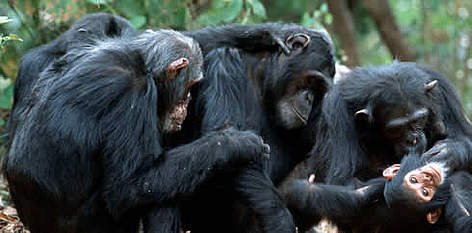
Mystery Surrounding The Export of Chimpanzees to China


Chimpanzees | WWF


Mystery Surrounding The Export of Chimpanzees to China

In July 2019 18 Chimpanzees were exported to China. They had CITES documentation but these show significant non-compliances with CITES and with the South African CITES Regulations, 2010.

WHERE WERE THESE CHIMPANZEES BRED?
 Perhaps somebody from PAAZA can answer the question.

This export has strong similarities to the Taiping Four case but less questions are being asked. Probably because it is Chimpanzees and not Gorillas,

The exporter was Hartbeespoort Snake and Zoo Park in North West Province, but it appears that Ms. Christa Saayman from Mystic Monkeys and Feathers Wildlife Park in Limpopo Province, acted as the export agent.

The importer was Beijing Green Landscape Zoo, also known as Beijing Wildlife Park (BWP). 18 chimpanzees arrived in China but it is understood that BWP only has 15. It is unclear where the remaining 3 are. There is no evidence that they were returned to South Africa, but there is some information that they may possibly have been taken to Jinan Zoo.

Chimpanzees are listed on Annex 1 of CITES. In terms of the “fundamental principles” of the Convention, Annex 1 species are those “threatened with extinction which are or may be affected by trade. Trade in specimens of these species must be subject to particularly strict regulation in order not to endanger 2 further their survival and must only be authorized in exceptional circumstances.”

It is understood that some of these Chimpanzees were pregnant at the time of export.


photo 
Peter Dickinson
Independent International Zoo Consultant

Sunday, October 30, 2016

Just What are Egyptian Authorities Playing At?


Just What are Egyptian Authorities Playing At?

On the 25th October the Ministry of Supply and Internal Trading put up for auction 500 Kg of confiscated ivory. What was the point? Confiscated by Customs and Excise and then offered for sale elsewhere. Egypt is a CITES signatory.

If it had not been for the timely intervention of Ms Dina Zulfikar this sale would have taken place. She attended the auction and bravely stood up and protested to the Assay and Weights Administration, Chairperson Brigadier General Mohamed Hanafi that including confiscated ivory in the auction violates the law. Happily he listened to her and the auction of these items was stopped.


What happens next?


Peter Dickinson
Independent International Zoo Consultant
      

Tuesday, February 22, 2011

Wildlife law enforcers build skills to combat illegal wildlife trade


Law enforcers are being trained this week on how to identify threatened reptile species and familiarize themselves with international wildlife protection policies in an effort to combat illegal wildlife trade in the ASEAN region.

The workshop will be led by Vietnamese trainers who attended a “Training of Trainers” for members of the ten ASEAN nations last month in Malaysia , as part of a project funded by the Japan-ASEAN Integration Fund and Ministry of the Environment, Japan under the East and Southeast Asia Biodiversity Information Initiative (ESABII). The project seeks to involve and enhance the capabilities of ASEAN and neighbouring countries in the understanding and application of taxonomic knowledge and wildlife trade regulations.

Viet Nam is the first country in the region to be selected to organize its own CITES and species identification course, conducted completely by national trainers.

The three-day course will equip key staff working in land and air ports in southern Viet Nam with basic knowledge of the wildlife trade in Southeast Asia, international regulations governing the trade, such as CITES (the Convention on International Trade in Endangered Species of Wild Fauna and Flora), and relevant national laws. Participants will also be trained to identify threatened reptile species that are commonly traded in the region during an interactive session at the Saigon Zoo.

Illegal wildlife trade has been identified as one of the greatest threats to the region’s biodiversity. In his opening speech, Dr Ha Cong Tuan, Deputy Director of Viet Nam ’s Directorate of Forestry, said: “This training will help equip law enforcers who are working to control international wildlife trade with the skills to more effectively protect and sustainably use our precious natural resources.”

Mr. Manop Lauprasert, Senior Officer of the ASEAN-Wildlife Enforcement Network (ASEAN-WEN) Program Coordination Unit, which is supporting the training, added “Criminal networks are taking advantage of limited enforcement capacity at land, sea and airports across the region. Training initiatives such as this will help to close these gaps, and prevent wildlife from being smuggled across international borders. The ASEAN WEN PCU is encouraged to see countries take such important steps to end the illegal wildlife trade”.

There is increasing recognition that wildlife trade, both legal and illegal, is becoming more common at international ports, therefore capacity building for airport and land port staff plays an important role in stopping wildlife trafficking.

Regional Director of TRAFFIC Southeast Asia , Dr. William Schaedla said, “This course is not only helping to impart the necessary knowledge and skills to front line enforcement officers and other key stakeholders, but also supporting Vietnamese officials to continue to lead such capacity building initiatives.”

The training course will be conducted in District 1, Ho Chi Minh City by the Viet Nam CITES Management Authority, Biodiversity Conservation Agency and Natural Museum with support from TRAFFIC Southeast Asia , Ministry of the Environment of Japan, and ASEAN-WEN.


***
For Books on Zoo Management and more please visit
***
For regular updated Zoo News, Views, Reviews and Vacancies please visit
 Zoo News Digest on
Learn More About Zoos and Aquariums by visiting
and subscribe to the largest and longest established zoo related ezine
by clicking

'No Mirrors Involved'
Snow Leopards
Photo supplied by Peter Litherland of the


Sunday, February 7, 2010

Fifteenth meeting of the Conference of the Parties

Please read the bottom paragraph of this page. You may decide to read the rest!

Fifteenth meeting of the Conference of the Parties

The 15th meeting of the Conference of the Parties (CoP15) will be held in Doha, Qatar, from 13 to 25 March 2010

Sheraton Doha Resort & Convention Hotel
Al Corniche Street
Doha, Qatar
 
READ


Doha, Qatar 13 – 25 March 2010


FAUNA

CoP15 Prop. 1 Canis lupus Annotation Switzerland

CoP15 Prop. 2 Lynx rufus USA

CoP15 Prop. 3 Ursus maritimus USA

CoP15 Prop. 4 Loxodonta africana U.R. of Tanzania (Rev. 1)

CoP15 Prop. 5 Loxodonta africana Zambia

CoP15 Prop. 6 Loxodonta africana Annotation Congo, Ghana, Kenya, Liberia, Mali,
Rwanda, Sierra Leone

CoP15 Prop. 7 Anas oustaleti Switzerland (AC)

CoP15 Prop. 8 Crocodylus moreletii Mexico

CoP15 Prop. 9 Crocodylus niloticus Egypt

CoP15 Prop. 10 Uromastyx ornata Israel

CoP15 Prop. 11 Ctenosaura bakeri, C. oedirhina, C. melanosterna Honduras

CoP15 Prop. 12 Ctenosaura palearis Guatemala

CoP15 Prop. 13 Agalychnis spp. Honduras, Mexico

CoP15 Prop. 14 Neurergus kaiseri I.R. of Iran

CoP15 Prop. 15 Sphyrna lewini, S. mokarran, S. zygaena, Carcharhinus plumbeus, C. obscurus Palau, USA

CoP15 Prop. 16 Carcharhinus longimanus Palau, USA

CoP15 Prop. 17 Lamna nasus Palau, Sweden (EU)

CoP15 Prop. 18 Squalus acanthias Palau, Sweden (EU)

CoP15 Prop. 19 Thunnus thynnus Monaco

CoP15 Prop. 20 Dynastes satanas P.S. of Bolivia

CoP15 Prop. 21 Coralliidae spp. (Corallium spp. Paracorallium spp. Sweden (EU), USA

EXAMPLE:

Transfer of Ursus maritimus from Appendix II to Appendix I

RECOMMENDATION – REJECTION

This proposal is rather based on emotion than science, the polar bear becoming a flag species for many NGOs and some States. It is at least premature, as based on rather long term speculations, and is not supported by the other range States. In addition, the species is covered by a specific Agreement between the five range States, the opinion of which is not provided in the supporting statement. In contradiction with the argument used to justify a ban on trade in the species, it is of interest to note that the proponent has recently signed an agreement with another range State, the Russian Federation, which authorizes local hunting in part of the Russian territory where it was prohibited so far. Finally, the current Appendix-II listing allows all range States to adapt their management to the circumstances and prohibit any trade if this would be considered as conservation need.

And More

Friday, January 15, 2010

Rhino Conservation and Poaching Punishments

International Spotlight: Zimbabwe Rhino Poaching Court Case a Turning Point?


Conservationists concerned with inconsistent sentencing of poachers


Zimbabwe– This month, Tichaona Mutyairi, a Zimbabwe rhino poacher with the infamous Mazhongwe gang, was sentenced to 17 years in jail after being captured during an exchange of gunfire with the police in October 2009. Although a regional court in the town of Masvingo took a strict stance, punishing the poacher to the full extent of Zimbabwe ’s wildlife and firearm laws, this sentence remains a rare occurrence among captured poachers.


International conservationists are watching the Mutyairi case given the highly varied outcomes in several court cases against members of rhino poaching gangs that have recently been finalized or are still underway.

In previous court cases, many poachers have been released from jail escaping punishment instead of facing strong, consistent sentences that would deter them from hunting down Zimbabwe 's remaining rhinos.

“After so much conservation effort and funding has been ploughed into rhino protection in Zimbabwe , we look to the Zimbabwean authorities to hold up their side of our shared commitment to conserve rhinos,” said Dr. Susie Ellis, executive director of the International Rhino Foundation. “If strict sentences continue to be imposed on poachers, there may finally be a chance that the poachers will start to back off from their all-out assault on Zimbabwe ’s remaining rhinos”.

These court rulings will be put under the international spotlight when Zimbabwe’s track record of rhino conservation is assessed at the March conference of parties to the International Convention on Trade in Endangered Species (CITES). By then, it may be clear if Mutyairi’s recent case is a turning point in the conservation battle or is merely false hope that Zimbabwe ’s law-enforcement officers and court officials have resolved to confront the poaching menace.


The temptation to poach rhinos has been stimulated by weak levels of law enforcement in Zimbabwe . Since January 2008, approximately 40 rhino poachers have been arrested, often through the efforts of private rhino custodians. However, fewer than five of the arrested poachers have actually been convicted for their crimes, which include use of illegal firearms and the slaughtering of the endangered rhino species.

In one failed court case which conservationists found particularly disturbing, a Zimbabwean High Court judge granted bail to a group of poachers who were found with five automatic assault rifles and admitted to killing seventeen rhinos. This ruling overturned another ruling in a more junior court case in which captured gang members were released from jail until sentencing giving them the opportunity to immediately abscond. The same process was followed shortly afterwards in a similar case, allowing two Mazhongwe gang members to vanish into thin air instead of remaining in jail.

While conservationists applaud the professional action of the Masvingo court and the police investigators who built the case against Mutyairi, they worry his lawyer will follow the route of appealing to another court. The financial power of poaching syndicates and the legal antics that have disrupted other convictions could still come into play in this process.

According to the Lowveld Rhino Trust, which monitors and manages rhinos in southern Zimbabwe , approximately 130 rhinos were poached for their horns between 2008 and 2009. The Mazhongwe poaching gang, led by brothers “Big Sam” and Ishmael, are responsible for at least a quarter of these losses. Rhinos are killed for the sole intention of selling their horns on the black market, which are used in traditional Asian medicine to reduce fever. The willingness of emboldened poachers such as the Mazhongwe gang to fire upon law enforcement patrols that interfere with their hunt in Zimbabwe has resulted in a literal war.

“The illicit horn deals provide a relatively good income for opportunists like the Mazhongwe gang trying to survive in Zimbabwe ’s collapsed economy,” said Ellis. “We are continuing our efforts to put pressure on the Zimbabwean government to keep rhino poaching at bay. Only time will tell how the Zimbabwean courts will handle prosecuting future rhino poachers.”

Rhino poaching remains a high-stakes, organized endeavor in Zimbabwe undertaken by everyone from government officials and foreign diplomats to gangs of violent criminals.


# # #


About the International Rhino Foundation


The International Rhino Foundation is a global not-for-profit organization dedicated to the survival of the world’s rhino species through conservation and research, and increasing


awareness about the plight of the rhino. To learn more about the IRF or make a direct contribution, visit http://www.rhinos-irf.org/
Tuesday, December 29, 2009

Ursa Freedom Project

A message to all members of Ursa Freedom Project


                                  Photo By: http://www.flickr.com/photos/38485387@N02/


In just a few weeks, wealthy trophy hunters on snowmobiles -- who pay up to $30,000 per hunt -- will start chasing down polar bears in Canada, shooting them, and bringing home their lifeless bodies as decorations for their trophy rooms.

The polar bear is perched on the brink of extinction, and yet mindless people still hunt them and reckless governments still allow the hunts. If people don't rise up to stop the hunts, the slaughter will continue, and polar bear populations will keep diminishing until the last polar bear vanishes from earth. Extinction is forever.

We have a very short window of time to build international support and win a showdown vote in March for stronger polar bear protections under the Convention on International Trade in Endangered Species -- or CITES.


                                         Photo By: http://www.flickr.com/photos/arcticpuppy/

A few short minutes of your time is a matter of life and death for the majestic polar bear.

Support NRDC in its efforts to end the trade in polar bears.

Support the Humane Society of the U.S. and learn what you can do to save polar bears.

Thanks for being a part of Ursa Freedom Project and using your voice to create a better future for us all.


Visit Ursa Freedom Project at:
http://ursafreedomproject.ning.com/?xg_source=msg_mes_network