Friday, January 1, 2010

The Mysterious Disappearance of the Pier 39 Sea Lions partly solved

Missing Pier 39 Sea Lions May Have Headed South

Scientists and tourists who have been puzzled by the recent disappearance of hundreds of sea lions at Pier 39 may be relieved to learn that at least some of those aquatic mammals have turned up at a now crowded harbor in Monterey County.


                                        Photo By: http://www.flickr.com/photos/araswami/


The moss landing harbor visitors' dock has been entertaining a good deal more foot traffic the past few days because of the arrival of scores of sea lions. While the mammals are far from an unusual sight at the dock, in the past week the sea lions have practically taken over the harbor.


"I can't believe how many there are here,” said Everett Walker who was visiting from the town of Longview in Washington state. “I started counting and I estimated there must be close to a thousand there on that thing over there."


It was an amazing sight, even for people who regularly come to moss landing mainly to see the sea otters.


"Oh we've seen them down in this area before, but not like this," said Ben Lomond resident Elaine Rhodes.


The huge community of sea lions spread out on Moss Landing’s docks and harbors
 
>>>READ FULL ARTICLE>>>

The Waikiki Aquarium is growing more than 127 species of Coral

I love Coral and I am fascinated by Coral Aquariums. One of the finest books I have ever read...which in all honesty would be of interest and fascination to anyone is titled 'Coral' by Steve Jones. Give it a go. I am sure you won't regret it. - Peter


                                    Photo By: http://www.flickr.com/photos/laszlo-photo/

The Waikiki Aquarium's Coral Collection


The Waikiki Aquarium has one of the largest coral collections in the world. Here’s why.
 
In many parts of the world, coral is now endangered or severely threatened,” says Waikiki Aquarium director Andrew Rossiter. Hawaii’s corals are not currently considered endangered, but damage to them is progressing due to factors such as global warming, marine activities and sedimentation.


For this reason, Waikiki Aquarium is growing more than 127 species from the South Pacific and Hawaii. Think of the collection as an insurance policy of healthy coral, just waiting to be reintroduced into the wild if a species goes extinct.


The program began in 1978, when Waikiki Aquarium biologists discovered a way to keep coral alive while in captivity. (The system the aquarium pioneered mimics the ocean, but in a tank: water flows in all directions, and artificial light simulates the wavelength of sunshine). Today, the technology is used worldwide.


How researchers get the coral is a delicate endeavor. “We locate a large colony, say about four feet by four feet,” explains Rossiter. “The coral has all these tiny little fingers on it, most of them about 2-inches long. We remove a finger, put it in an egg crate, then put it inside an incubation tank where it’s given ideal conditions to grow.” The cutting doesn’t hurt the coral. The finger usually replaces itself in about two weeks.


On the aquarium’s lawn, an exhibit called the Coral Farm demonstrates the growing process. A few years ago, coral in the tank grew so large that fish in the exhibit became cramped


>>>READ MORE HERE>>>

Bengal tiger reels in tourists to Cebu City zoo

Bengal tiger reels in tourists for zoo

SINCE 2010 is the Year of the Tiger, the Cebu City Zoo expects more tourists to visit their two-year-old Bengal Tiger Bogart, if only to pat the animal for good luck the whole year round.


Giovanni Stephen Romarate, the zoo's administrator, said they had to open the zoo at 6 a.m yesterday because they could not refuse the four buses of tourists who came all the way from Masbate just to see Bogart.


The Cebu City Zoo is situated at a hilly portion of the city in barangay Kalunasan.


Romarate said that since Bogart arrived at the zoo, they noticed an increase in the number of of visitors.


Adults are charged P25 each and P10 each for the children.


According to the Chinese horoscope, 2010 is considered the Year
 
>>>READ FULL ARTICLE>>>  And read more still by reading D'Family Park Zoo in Cebu City

Tarantula Hairs are a well known hazard in zoos

An eye-opening tale about the hazards of keeping pet tarantulas

Here’s a medical mystery – and a cautionary tale – for all you tarantula owners out there, courtesy of the new issue of the Lancet:


                                         Photo By: http://www.flickr.com/photos/rd_07/


A 29-year-old British man with a red, watery and photophobic eye sought treatment from his general practitioner. The doctor presumed the patient had conjunctivitis (also known as “pink eye”) and prescribed an antibiotic ointment.


However, his symptoms persisted three weeks later, so he went to an ophthalmology practice at St. James’s University Hospital in Leeds. The specialists initially considered a very similar diagnosis of viral keratoconjunctivitis, which involves inflammation of the cornea as well as the conjunctiva.


Then they examined the patient’s eye under higher magnification and found “fine hair-like projections” at “varying depths within the cornea.”


Yuck.


The ophthalmologists weren’t sure what to make of them, so they asked the patient. He instantly recalled an incident from three weeks earlier, when he was cleaning the glass tank (or terrarium) that housed his pet Chilean Rose tarantula.


Here’s what went down, as described in the Lancet:


While his attention was focused on a stubborn stain, he sensed movement in the terrarium. He turned his head and found that the tarantula, which was in close proximity, had released a “mist of hairs” which hit his eyes and face.

                                                      Hairy Legs

                                           Photo By: http://www.flickr.com/photos/tjframe/


It turns out that many tarantula breeds, including this one, are known to shoot fine barbed hairs at their attackers as a self-defense mechanism. Mystery solved! The patient was diagnosed with ophthalmia nodosa, a condition in which the eye reacts to “insect or vegetable material,” the ophthalmologists reported.


The doctors tried to remove the hairs from the patient’s cornea but even

>>>READ FULL ARTICLE>>>

A cure for the Tasmanian Devil facial tumour disease may be in sight

Scientists find clue to killer of Tasmanian devils


Fierce as they are, Tasmanian devils can't beat a contagious cancer that threatens to wipe them out. Now scientists think they've found the disease's origin, a step in the race to save Australia's snarling marsupial.


                                Photo By: http://www.flickr.com/photos/andy_bernay-roman/

The furry black animals spread a fast-killing cancer when they bite each other's faces. Since the disease's discovery in 1996, their numbers have plummeted by 70 percent. Last spring, Australia listed the devils — made famous by their Looney Tunes cartoon namesake Taz — as an endangered species.


There's no treatment, and little hope of finding one until scientists better understand what's fueling this bizarre "devil facial tumor disease." So an international research team picked apart the cancer's genes, and discovered that it apparently first arose in cells that protect the animals' nerves.


The surprise finding, reported in Friday's edition of the journal Science, has led to development of a test to help diagnose this tumor.


Next, scientists are hunting the mutations that turned these cells rogue, work they hope could one day lead to a vaccine to protect remaining Tasmanian devils, or perhaps treatments.


"The clock's ticking," lead researcher Elizabeth Murchison of the Australian National University said by phone from Tasmania. "It's awful to think there could be no devils here in 50 years because they're dying so quickly."


The devils, known for powerful jaws, fierce screeches and voracious consumption of prey, are the world's largest marsupial carnivores. They don't exist in the wild outside Tasmania, an island south of Australia.


What triggered this cancer, which causes tumors that grow so large on the face and neck that the animals eventually can't eat?


It didn't jump from another species, said Murchison. Tasmanian devils, for unknown reasons, are prone to various types of cancer. This tumor's genetic signature suggests that probably no more than 20 years ago, mutations built up in some animals' Schwann cells — cells that produce the insulation, called myelin, crucial for nerves — until the

>>>READ FULL ARTICLE>>>

Updates on the Orca Trainer death in Loro Parque

Loro Parque update on the tragic death of Orca coach Alexis Martínez

This unfortunate and sad accident occurred around 10.30 a.m. on December 24th, at which time the highly experienced veteran coach was performing one of the regular exercises with 13 year-old Keto, the oldest, noblest and most experienced Orca at Loro Parque, who was born in captivity.


Preliminary reports show no signs of violence to his body, either through hitting or biting by the Orca, ruling out an attack; it was a lack of oxygen and drowning that was the apparent cause of his death.

Neither his team mates nor the medical team immediately summoned on the 112 emergency service could resuscitate him.

This tragic accident has shocked the whole family, colleagues and Loro Parque team who loved Alexis, and his death has been a very hard blow to everyone as he was a highly valued partner and an excellent professional who was passionate about orcas.

After the funeral which was held today, the whole family, friends and Loro Parque associates will hold a mass in his memory in the coming days.

Workers and managers of Loro Parque on behalf of his family

Read More HERE
 
And The Next Article...
 
Loro Parque trainer died from asphyxia caused by compression of the chest in rough play
 
A Loro Parque press release says that it believes Alexis died as a result of asphyxia caused by compression of the chest. It seems that although they were training for a new Christmas special, the actual exercise in which the accident occurred was one that had been performed daily for the last three years, and involved both whale and trainer submerging together to gain speed to be propelled to the side of the pool side by side.


The whale, Keto, 14 years old and born in captivity in the USA, is said to be the largest and most experienced of the cetaceans at Loro Parque. On this occasion, however, he reacted unexpectedly and Alexis was pushed out of the way. Some sources have been saying that Keto was known to “play rough”, and had been known to challenge older whales. As such, he was not considered completely predictable, but on the other hand, Alexis himself was one of the most experienced trainers in Loro Parque, and it has been stressed repeatedly that Keto’s behaviour was not an attack. La Opinion


Originally Posted 24 December: A Loro Parque trainer has been accidentally killed by one of the whales during the first training session for a Christmas spectacular. The trainer was 29-year-old Alexis Martínez from Puerto de la Cruz, and the accident occurred at 10.30 am this morning. The other 7 trainers were also present in the training session. As far as can be determined at present, Alexis was hit by the whale, and his death was caused by drowning after being under water for several minutes before he was rescued.

He was immediately assisted by the specialist

And More HERE

Plus on this second link there is considerable comment and discussion which you make like to join in with.

Extinction - scaremongering and propaganda?

Blackwashing: do NGO tactics risk long term public trust?

Instead of making exaggerated claims about species becoming extinct, NGOs could make progress on issues like deforestation by collaborating more closely with companies, claims a new report


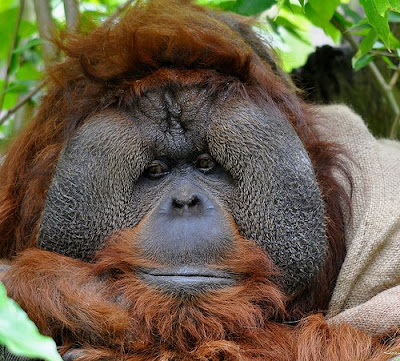
The continued expansion of palm oil plantations means orangutans are just a few years from extinction, if you accept the predictions of various environmental groups, including Friends of the Earth.


                                  Photo By: http://www.flickr.com/photos/1967chevrolet/


One group, the Rainforest Action Network (RAN), has gone further in claiming, 'orangutans are predicted to become extinct as early as 2011.'


Neither claim is likely to be true and may in fact be evidence of 'blackwashing', a term used to describe environmental scaremongering and propaganda.


A report published recently in the journal of tropical biology and conservation analysed the publicity tactics used by both NGOs and palm oil companies on the issue of tropical deforestation.


It is openly critical of groups, including FOE and RAN, for making, 'exaggerated claims in their campaigns...misleading and unverified accusations of avoidable environmental degradation by corporations.'


It says there are 50,000 orangutans in 54 wild populations scattered across Sumatra and Borneo. And that at least 38 of those populations exceed 250 individuals, the level needed to maintain a viable breeding population.


No extinction in 2011


Other organisations like the Sumatran Orangutan Society refuse to use extinction dates because of their unreliability. ‘We prefer to say that they are likely to be the first great ape species to become extinct unless we stop deforestation,’ says spokesperson Helen Buckland.


Report co-author Rhett Butler explains further: 'We aren't saying the deforestation isn't occuring (it certainly is) but that NGOs need to be careful about getting the facts right. For example, claiming that orang-utans are going to be extinct by 2011 is not accurate.'


RAN admitted that its figure was inaccurate. Spokesperson Margaret Swink said it had been taken from a Guardian news report that in turn got it from a British orangutan association.


'Everyone wants to take the fact that is the most convincing or grabs people's attention the quickest. We try and be as accurate as possible but we don't always succeed.


'We are a campaigning organisation so research is not our main thrust,' she says.


Unfair comparison


Swink says she hopes people realise that the action they and other NGOs take are designed to force corporations to be more responsible and acknowledge the impact their decisions have on wild orangutan populations.


'This is the critical point rather than the exact extinct date of 2011, 2015 or 2020,' she says.


A point reiterated by Friends of the Earth (FOE), who said it was 'completely unfair' to compare the tactics of corporations and NGOs.


'On the one hand FOE is concerned about human rights and environmental protection. On the other hand, you have PR projects funded by industries that destroy the environment and commit human rights abuses,' says head of economics Ed Matthews.


Matthews said species like the orangutan were emblematic of the wider destruction of rainforest in Indonesia. 'To get corporations to act, to galvanise political parties, we have to focus on emblematic cases.


'But we would never have used the figures we used if we had not thought it was credible,’ he says.


Short-term tactics


The report says such an approach could actually be 'counterproductive' to safeguarding against deforestation.


In the short term, says the report, blackwashing can 'make headlines, raise the profile of environmental debates and increase donations'. But in the longer term, blackwashing exposed for what it really is could, 'diminish the trust invested in environmental groups and more generally undermine public support for conservation.'


Co-author Rhett Butler says NGOs rushing to defend their use of facts are missing a more important point, namely the unprecedented power environmental groups have to change corporate behaviour, if they stick to accurate facts.


'Given current trends, it seems likely that in the future the bulk of environmental degradation (especially deforestation) will be driven by industrial enterprises rather than subsistence users. Thus since corporate entities are the actors, engagement is important.'


NGO power


Butler points to the success of a recent Greenpeace campaign that pressurised the largest soy crushes in the Amazon to implement a moratorium on soy processing, pending the development of a tracking mechanism to ensure their crop was coming from environmentally-responsible producers.


He said while the rise of industrial-scale deforestation was ‘alarming’, it allowed NGOs to focus their attention on a ‘vastly smaller number of resource-exploiting corporations’.


‘Many of these are either multinational firms or domestic companies seeking access to international markets which compels them to exhibit some sensitivity to the growing environmental concerns of global consumers and shareholders,’ says Butler in a previous report he co-authored, ‘New Strategies for conserving tropical forests’

>>>Read Full Article>>>