Zoo News Digest is the longest established and most widely read listing of current 'zoo' related news on the internet. It notes 'real' events of interest to people working within the zoo industry. By a Zoo Professional for Zoo Professionals and other interested parties. The Digest includes comments and notification of courses and events.
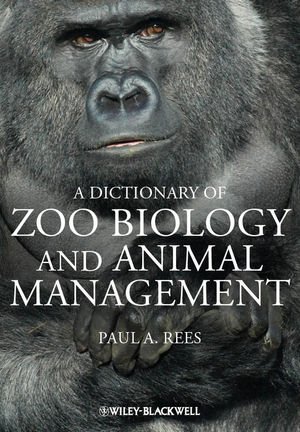
This dictionary is intended as a guide to the terminology used in a wide range of animal-related programmes of study including agriculture, animal care, animal management, animal production, animal welfare, veterinary nursing, wildlife conservation and zoo biology. In total it contains over 5,300 entries. It contains a wide range of terms used in the fields of veterinary science, physiology and zoology, as students whose primary interests are animal welfare or zoo biology also need to have some understanding of disease, how animal bodies function and how animals are classified. It also contains some legal terms, and reference to some legal cases, to help students understand how the protection, use and conservation of animals is regulated by the law. Some people, famous animals, literature and films have influenced the way we think about, and behave towards, animals. For this reason, the book includes references to important books about animals, famous animals who have starred in films or been the subject of scientific studies, along with short biographies of famous scientists and others who have studied animals or established conservation or animal welfare organisations.
To learn more or to order this book please click HERE
The latest addition to the library of books dealing with zoo biology and zoo management. Not yet published, it is available at a reduced price for those who pre-order it. It can be purchased now through:
Although primarily intended for the increasing number of students who are taking one of the wide range of animal management courses. Even so it will be a valuable new book for the zoo professional to refer to.
The book deals with all aspects of zoos including nutrition, enrichment, history, breeding programmes, education, legislation and so much more. Although it is not a cheap book it is one that no good zoo can afford to be without.
Earlier in the week I was answering a couple of queries on Yahoo Answers. I don't go on there very often. I certainly don't go on to abuse the system or cause trouble, simply to answer questions. It makes me think and gives me ideas and lets me spot trends. I had been busy for literally minutes before a warning flashed up saying I was suspended for abuse. I could not figure it. I had done nothing wrong. I have had similar 'suspensions' before from both Facebook and a couple of Social Bookmarking sites for entering too much information too quickly. There I was automatically re-instated usually an hour later. Yahoo Answers was different. Two days later I checked and I was still locked out. There was an email address to write to if I thought it was wrong so I wrote. A little later I had a reply to say the address I had written to was no longer in use and that I should check out the small print. I did. There is a lot of it. I waded through it and could still find no reason for a suspension. There was a choice of contact subjects to email to but not one for my problem. I chose the nearest equivalent and emailed that. To my horror I had a reply which said that they had looked into my case and I was to be completely suspended and would lose everything on Yahoo associated with me. This included Zoo Biology, Zoo News Digest etc. Needless to say, I panicked. Big time and sent out a warning message to group members. I had literally hundreds of emails of support along with suggestions and offers of aid. I am going to try and answer them all but it will be a struggle to do it in a day of so. Especially so as messages keep coming in. If I miss anybody I apologise but thank you one and all.
The good news is that the answer to the problem was amongst the suggestions. This was simply to change over the Group ownership. This I have done. So nothing will change. You don't have to do anything. Everything will work as before. There will be no interruption of services.
I wondered whether it would be a good time to change over to something different. We know it isn't perfect but it does work. The Zoo Biology Group and Zoo News Digest have been on Yahoo for ten or so years now, they were on egroups previously and on my own system before that. There has never been a problem whilst on Yahoo up till the other day. I have decided to stay with it for now. I can review again later. So, as I said the Panic is over. Thank you one and all.
After I posted the message out to the group members I got to thinking that perhaps I had done nothing wrong at all. If I had then it can be only a very minor infringement of the rules. I have been with Yahoo for years. I pay them money every month. I have my photographs stored on their affiliate. One little wrong could surely not mean a ban?
So perhaps, just perhaps it is something I have said here in my editorial. I am outspoken on certain issues because I can be. I do upset people in high places. It is not as if I have not had the threats. So someone powerful has a word with someone powerful and something happens. Does it sound like I am barking up the conspiracy tree or barking mad?
Perhaps not. In my messages of support there were more than one who suggested that as a possibility and one stated:
"Well done! Keep it up and keep your tone! I like the fact that you say what you think whatever others may think. It's crucial. Thanks for everything you do."
I like that word 'crucial'. Rest assured that I remain 100% committed to supporting good zoos but where I see wrong I will say it.
I covered the story about the 'Gay' vultures a couple of weeks ago with a link but I did not comment. Today I am just going to comment on the title of the latest link "German Zoo Forces Gay Vultures to Mate With Females". Ridiculous. Anyone who knows vultures will know you cannot force them to do anything they don't like.
So how much did the Russian Tiger Summit decide to commit towards Tiger Conservation? I know Mr. Di Caprio donated $1 million. I know the summit stated they need $350 million for the first five years but who actually gave what? Just putting things into perspective here. The Detroit Tigers Baseball team have just signed a $50 Million four year deal with Victor Martinez (one man!). The jungle Tigers don't need money, they need action. There seems to have been an endless succession of back slapping meetings. I wonder that the summit has done any good at all. I hope so. As a little man sitting on the outside I believe that the only thing they really need to do is implement all the current protection that tigers have and should enjoy. Root out the corrupt, prosecute to the full extent of the law. That would work. Protect the forests and the tigers will sort themselves out. We really don't need to be talking about doubling the population. We can't even sort our own out.
You will note from the links that there are also plans afoot to protect the Giant Squirrel habitat. Here the Conservator of Forests (Wildlife) M.K. Rao said "A healthy forest is needed to support the squirrel, which sustains itself on..." This is exactly what the Tiger needs. A Healthy Forest!
I wondered what possibly could be new news on the 2007 San Francisco Tiger incident. 'Nachos!'... what a way to sell a paper.
I was delighted yesterday to see that there are plans for a facelift to the the Ninoy Aquino Parks and Wildlife Nature Center. It is about time. I am sure the people who work there will be jumping with joy. They have been striving to do a very worthwhile job whilst being let down with wholly inadequate facilities. But before everyone starts jumping up and down for joy one must think back to July 7th 2009 because that was the last time they announced that they would be doing this. You can read part of that newspaper article in my hub on Ninoy Aquino Park and Wildlife Nature Center in Manila in the Philippines
I dare say that we could all come up with examples but, just because something is the law does not make it right. As Mr Bumble said in 'Oliver Twist', "The law is an ass". How on earth could any law allow two mistreated and starved lion cubs to be returned to their idiotic owner after they had been nursed back to health. Yes the law is an ass. I dread to think what the keepers in Al Ain Wildlife Park and Resort think as it was they who did the nursing.
Al Ain Wildlife Park and Resort The Orangutans are waiting, the chimpanzees are waiting and the rest of the zoo world are waiting to see what will happen next
PHOTO
Do you have an animal/zoo/wildlife photo that you would like to see included at the start of Zoo News Digest? Sorry I can't afford to pay for it but I will credit you and link back to a website if you wish. Sadly I cannot guarantee when I will get round to including as this will depend on the level of response. If you are interested please email the photo to me. Use 'Photo' as your subject heading. Please give your full name, the name of the species and where the photo was taken. I look forward to hearing from you.
Remember that the festive season and the new year are just around the corner. You are never stuck for a gift by giving a Calendar or a book. Check out:
Kanpur zoo part of global network for animal exchange programmes
As the forest cover is gradually depleting in the country, a threat of extinction is looming large over the endangered species. At this point of time, the zoos are proving to be the pioneers of the effort to breed endangered animals. It is in this regard that the animal exchange programme is given due importance by the authorities of various zoos across the country. But the exchange programme is not an easy task as it requires comprehensive pool of knowledge before going ahead with it.
Thus, to make this task simpler, the Kanpur Zoo sometime ago became a member of the International Species Information System (ISIS), a global organisation that provides world-standard zoological data collection and a sharing software called ARKS (Animal Record Keeping System), enabling the various http://timesofindia.indiatimes.com/city/kanpur/Kanpur-zoo-part-of-global-network-for-animal-exchange-programmes/articleshow/6996314.cms
German Zoo Forces Gay Vultures to Mate With Females
German zookeepers are forcing two male vultures who prefer nesting together to mate with females, sparking outrage from gay rights activists who accuse the zoo of discriminating against birds of a different feather.
The trouble began back in March, when Guido and Detlef, two Griffon vultures, decided to move in together. The lovebirds began crafting a two-man nest out of stray twigs in a communal birdcage at their zoo in the town of Munster, in northwest Germany.
Both birds are predatory males, but seemed to enjoy one another's company more than that of any female. They spent their days grooming one another with their beaks and fortifying their nest -- though other vultures occasionally stole their building materials, as if to spite them.
"They always sat so closely together. They defended their nest from the other vultures," the zoo's curator, Dirk Wewers, told The Daily Telegraph of Australia.
But Wewers explains their preference for one another as second-best. "A suitable female was missing and in such a case vultures look for companionship from http://www.aolnews.com/world/article/german-zoo-forces-gay-vultures-to-mate-with-females/19734614
Singapore Zoo
Governments Commit to Save Tigers
The International Tiger Summit held this week in St. Petersburg approved a wide-ranging program with the goal of doubling the world’s tiger population in the wild by 2022, backed by governments of the 13 countries that still have tiger populations: Bangladesh, Bhutan, Cambodia, China, India, Indonesia, Laos, Malaysia, Myanmar, Nepal, Thailand, Vietnam and Russia.
Tigers’ habitats are being destroyed by deforestation and construction, and the animals are a valuable trophy for poachers who want their skins and body parts, which are prized in Chinese traditional medicine. Only about 3,200 tigers remain in the wild — a dramatic plunge from an estimated 100,000 a century ago.
The Global Tiger Recovery Program estimates the countries will need about $350 million in outside funding in the first five years of the 12-year plan. The summit was seeking donor commitments to help governments finance conservation measures.
The program aims to protect tiger habitats, eradicate poaching, smuggling, and illegal trade of tigers and their parts, and also create incentives for local communities to engage them in helping protect the big cats.
Leape said that along with a stronger action against poaching, it’s necessary to set up specialized reserves for tigers and restore and conserve forests outside them to let tigers expand.
“And you have to find a way to make it work for the local communities so that they would be partners in tiger conservation and benefit from it,” Leape said.
“To save tigers you need to save the forests, grasslands and lots of other species,” he added. “But at the same time, you are also conserving the foundations of the societies who live there. Their economy depends very much on the food, water and materials they get from those forests.”
About 30 percent of the program’s cost will go toward http://www.times.spb.ru/index.php?action_id=2&story_id=33031
Polar Bear Cubs
Scotland's beaver-trapping plan has wildlife campaigners up in arms
Scottish National Heritage's plan to catch 20 beavers highlights problem of animals escaping from private collections
An urgent campaign has been launched to capture up to 20 beavers that have colonised rivers and lochs and are freely breeding in the wild.
The unpublicised project has been authorised by Scottish Natural Heritage, the government wildlife body, after it emerged that a large number of beavers had taken root following a series of escapes from private collections in Angus and Perthshire over the past decade.
Some wildlife experts believe that more than 50 beavers could be roaming free: families of beavers, and evidence of their lodge building, have been regularly seen by villagers and naturalists around Invergowrie on the outskirts of Dundee, Forfar in Angus, Glamis in Perthshire, and Tentsmuir near the mouth of the river Tay.
The animals will be trapped and given to the Royal Zoological Society of Scotland, which houses beavers at its Highland wildlife park and is closely involved with the UK's only official beaver reintroduction scheme at Knapdale forest in Mid-Argyll.
But pro-beaver campaigners have furiously attacked the trapping exercise, accusing the conservation agencies of bowing to political pressure from landowners and urging the protection of the Knapdale project to avoid it being damaged by rows over illegal releases.
Sir John Lister-Kaye, a former president of the Scottish Wildlife Trust who keeps beavers at his Aigas wildlife sanctuary near Inverness, said the animals were once native to the UK and should be given protection under European conservation directives if they were breeding successfully.
"I think this is quite simply professional jealousy. Scottish Natural Heritage and the zoo have been quite hostile to those of us who have private collections or who know quite a lot about beavers," he said. "I think the public needs to be in on this debate; they've voted 59% in favour of the beaver."
His criticisms were shared by Paul Ramsay, who owns captive beavers at Alyth near Dundee. He admitted some of his animals had previously escaped but said that wildlife laws were clear: if a previously native species had re-established itself and was healthy, then it could be legally protected. "I think it's extraordinary that they should take this hostile view," he said.
SNH said the trapping operation, which is being supported by Tayside police, was a matter of urgency because beavers were spreading so rapidly. A spokesman said: "The longer we leave it the greater the task will be. We are also urging all owners of animal collections to take greater care in keeping their animals captive."
The controversy highlights a long-standing but rarely discussed problem across the UK, with persistent escapes from private beaver collections and wildlife reserves over the past 20 years, many of which have been covered up or gone unreported.
The Guardian has established that at least 20 beavers are known to have escaped from collections across southern England, the Midlands and Scotland. In some cases, the beavers were either quickly trapped and returned to captivity or believed to have been killed. However, naturalists are convinced they have now established colonies in the wild in the Scottish Highlands, particularly on Loch Tummel and on the Tay and its tributaries, but also potentially in southern England.
In parallel, conservationists in Wales and south-west England have been planning their own legally sanctioned beaver reintroduction projects, but these were being drafted before last month's deep cuts in government spending on environment programmes.
In Knapdale, there are now four beaver families living and breeding on a network of remote lochs in an uninhabited http://www.guardian.co.uk/environment/2010/nov/25/beavers-scotland-conservation
Forest dept faces stiff opposition on relocation
With the state forest department waiting for the dust to settle at Sariska before initiating any step in relocating another big cat to the reserve, it's a race against time. For if the department is keen on relocation, a strong opposition is building up to halt it.
Sources said: "A big lobby, whose members are into conservation and tourism, do not want more relocation. They have always been against relocation of tigers from Ranthambore fearing it would take away tourists from the national park. And now that they have a good enough reason, they are not willing to let it go."
However, Union minister of forest and environment Jairam Ramesh, chief minister Ashok Gehlot and the state forest department have insisted on continuing with the relocation in a bid to re-establish a tiger population.
After the death of first male tiger relocated to Sariska ST-1, the state has got into a massive exercise of overhauling the administrative machinery of the park. Relocation of villages from within the park is another top priority for the state after poisoning has been reported as a possible cause of tiger death.
During his recent visit to Sariska, Ramesh had urged the state forest department to speed up relocation . "I am under tremendous pressure in New Delhi," he said. Ramesh had advised the chief of National Tiger Conservation Authority (NTCA) Rajesh Gopal to imm http://timesofindia.indiatimes.com/city/jaipur/Forest-dept-faces-stiff-opposition-on-relocation-/articleshow/6966232.cms
Thailand wants to keep panda
THAI authorities are considering asking China to let Lin Ping, the first female panda born in Thailand, to stay in Thailand's Chiang Mai Zoo for two more years.
Prasertsak Boontrakulpuntawi, head of the zoo's panda-research project, said the contract to keep Lin Ping is going to expire in another six months, after which they have to send her to China.
Following talks to keep Lin Ping longer, Thai officials will have another talk in Thailand with senior Chinese wildlife conservation officials on December 20. Hopeful for a green light from China, the zoo planned the panda section expansion and requested Bt28.5 million from the Zoological Park Organisation or the government for the 2012 fiscal year.
On Saturday morning the 61.2kg cub was let out to the open-air display section for the first time. Its caretakers provided it with an 'Ice Cake' of fruits http://www.straitstimes.com/BreakingNews/SEAsia/Story/STIStory_608246.html
Examiner Uncovers New "Development" in 2007 Tiger Attack Case: Nachos
The Examiner reported on Thursday night that they obtained a never-before-released police interview with the Brothers Kulbir and Amritpal “Paul” Dhaliwal regarding the 2007 Siberian tiger attack at the San Francisco Zoo, which resulted in the death of 17-year-old Carlos Sousa Jr.. This exclusive report, released just in time for the third anniversary of the incident, promised a "tasty treat" in its headline, which turned out to be the fact that the three victims were eating nachos at some point before Tatiana the tiger escaped her enclosure and attacked them.
This revelation hardly has much relevance, as the article states: "The taped interviews, however, still do not reveal what happened that day, when police had to shoot the tiger to death after the attack." Inspector Valerie Matthews, who headed the investigation, questioned the brothers about whether http://sfist.com/2010/11/27/examiner_uncovers_new_development_in_2007.php
Plans afoot to protect giant squirrel habitat
A conservation plan for the endangered giant squirrel is being chalked out which inhabits the Bhimashankar Wildlife Sanctuary near Pune
Forest Department officials have teamed up with Bangalore-based Indian Institute of Science (IISc) to chalk out a conservation plan for the endangered giant squirrel, which inhabits the Bhimashankar Wildlife Sanctuary near here.
A peculiar animal known for its shyness and lightning pace, the Ratusa Indica species or the Indian giant squirrel is an attraction for the wildlife enthusiasts visiting the Bhimashankar forest, which also happens to house a famous Shiv temple, one of the 12 “Jyotirlignas“.
In coordination with IISc, we are working out a Geographical Information System (GIS) map to identify threats to the existence of the squirrel to know whether the forest area occupied by it is shrinking or not,” Conservator of Forests (Wildlife) M.K. Rao said.
At present, a census of the animal is being carried out by counting of its nests in the forest and the proposed GIS map is also expected to denote the human disturbance index.
“A healthy forest is needed to support the squirrel, which sustains itself on just leaves and fruit,” Mr. Rao said.
The IISc experts would interact with the forest field staff to enhance their technical skills for a better understanding of the ecology of giant squirrel, which leaps from one tree to another but never http://www.thehindu.com/sci-tech/energy-and-environment/article917240.ece?homepage=true
Geriatric animals pose challenges for zoos
On an overcast Friday at the Salisbury Zoological Park, Poopsie the Andean bear could not be found in her hammock, where she spends most of her time.
Instead, she kept warm in a burrow in her den, which she has called home for nearly 37 years. When she finally emerged, she did so slowly. As the light hit her gray fur, which was once brown, it became evident Poopsie is no spring chicken.
"She's 37? No wonder she's not too active," said Jennifer Cross of Easthampton, Mass.
Poopsie isn't the only animal at the Salisbury zoo who might qualify for a senior discount. According to Director Joel Hamilton, the zoo's female sloth is nearing 37, a few of the alligators are in their mid-30s and one of the flamingos is 42.
Animals tend to live longer while in captivity because "their lives are much easier," said General Curator Ann Konopik, who has been with the zoo for nearly 27 years.
"They don't have to hunt for food or worry about predation, hunters and poachers," she said. "Also, their medical needs are met."
The zoo will celebrate Poopsie's birthday Dec. 27. After she passed the age of 35 1/2, Poopsie became the oldest-living Andean bear on record and "she's http://www.usatoday.com/news/nation/2010-11-28-geriatric-animals-zoo_N.htm
International designer for India's first night safari
Renowned zoo designer Bernard Harrison, who has designed the famous Singapore night safari, will be designing the upcoming Greater Noida night safari, according to an official.
The Greater Noida night safari will be India's first and the world's fourth - the others being in Singapore, China and Thailand.
According to a Greater Noida Industrial Development Authority official, who didn't wish to be named as he was not authorised to speak to the media, Harrison had recently met officials to discuss the project. He is expected to arrive in India next week to present the digital project report (DPR) to officials.
The night safari, to be set up on over 222 hectares of land, will be located along the Yamuna Expressway near Gautam Budh University, around 40 km from New Delhi. The zoo will have animals like leopards, tigers, crocodiles, gibbons and crocodiles. Only lions will be brought from Africa.
It will also have casinos and restaurants to attract visitors. The land for the project http://economictimes.indiatimes.com/news/news-by-industry/et-cetera/International-designer-for-Indias-first-night-safari/articleshow/7005098.cms
Lions await trip to US refuges
The last of Bolivia's rescued circus lions — 12 females and five males — are now in the hands of animal rights activists, who say the big cats will be sent to wildlife refuges in the United States.
An Associated Press photographer visited the lions on Wednesday.
The felines, though still caged, were under the care of Animal Defenders International. ADI obtained them from circuses that gave them up in compliance with a pioneering Bolivian law that took effect in July prohibiting the use of all animals, domestic and wild, in circuses.
In May, ADI sent four lions to a sanctuary in California. In September, a baboon was sent to a primate center in Britain.
ADI is feeding the lions red meat and vitamin supplements — a big improvement http://news.yahoo.com/s/ap/20101124/ap_on_re_la_am_ca/lt_bolivia_liberated_lions
Edinburgh Zoo penguin cam snowed under with Twitter hits
Zoo closed but penguin snow antics still a hit online
Edinburgh Zoo is closed today due to the weather making it too dangerous for public access. But with hundreds of animals needing fed, most of the staff are still there.
When the attraction's marketing assistant Claire Richardson arrived at work this morning she noticed the penguin webcam was down. She could see the Gengtoo penguins were more active than ever, sliding around in the fresh snow, so rebooted the camera.
Richardson - who also looks after the zoo's Twitter account - sent out a tweet to let people know that, even though the zoo was shut, they could still tune in to see the penguins in action. Within just two hours, Edinburgh Zoo was trending in the UK's top Twitter searches. Richardson's link to the penguin cam was http://www.guardian.co.uk/edinburgh/2010/nov/29/edinburgh-zoo-penguin-cam-webcam-gentoo-snow
Zoo Society offers scholarship
The Fort Wayne Zoological Society is accepting applications for the Lawrence A. Ackerman Scholarship, which bestows a one-time $2,000 award to a college-bound high school senior pursuing an animal-related career.
The scholarship award is based on an applicant’s character, commitment to the stewardship of animals, financial need and scholastic achievement. Graduating high school seniors in Adams, Allen, DeKalb, Huntington, Kosciusko, LaGrange, Noble, Steuben, Wabash, Wells and Whitley counties are eligible to apply.
The Fort Wayne Zoological Society established the scholarship in 1992 to honor the the late Dr. Larry Ackerman, who served as the zoo’s veterinarian for 25 years.
Interested students can download an application at the zoo’s website, www.kidszoo.org. Students may http://www.fwdailynews.com/index.php?option=com_content&view=article&id=9566:Zoo-Society-offers-scholarship&catid=51:latest&Itemid=6
DENR plans P500-M facelift for QC wildlife park
The Ninoy Aquino Parks and Wildlife Nature Center in Quezon City will get a P500-million facelift to turn the place into an ecological tourist attraction and a respite from the urban jungle.
The Department of Environment and Natural Resources (DENR) is leading the transformation of the 22.7-hectare park, which houses an assortment of Philippine plants and animals confiscated from illegal traders or turned in by the public.
Urban planner Palafox and Associates was behind the master plan for the park’s redevelopment.
Environment Secretary Ramon Paje said he was looking for partners in the private sector to finance the project since his department’s budget could not shoulder the cost of the facelift.
“Our resources are very limited, whereas the private sector has the much-needed http://newsinfo.inquirer.net/breakingnews/metro/view/20101129-305931/DENR-plans-P500-M-facelift-for-QC-wildlife-park
European cheetahs spearhead drive back into wild
Two European-bred cheetahs are set to take part in a pioneering program to release their young back into the wild in an attempt boost their declining numbers.
As part of the program the hand-reared cheetahs Boumani and Zina will soon be swapping their green fields in Kent, south east England, for the arid Savannah of Kenya early next year.
It is hoped the pair will breed there in a 500-acre enclosure and that their offspring will be taught to hunt by their mother Zina during extended excursions into the adjoining Tsavo national park.
This method of reintroducing captive-bred cheetahs into the wild has never been attempted, says their keeper Jonathan Ames.
"My dream is to prove that captive-bred cheetahs can be successfully placed back in the wild, it is something that has been very unsuccessful [in the past]," Ames told CNN.
"There is no point in breeding cheetahs in captivity if they can't go back into the wild," he adds.
Cheetahs are more vulnerable than many other large predators in Africa -- they are designed for speed and they prey on a relatively small numbers of species, needing vast tracts of land in which to hunt and breed. They are also vulnerable to attack from lions, hyenas and leopards.
The cheetah has three main threats to its survival, according to the Namibia-based Cheetah Conservation Fund: A loss of habitat to farming and urban development; persecution by farmers who think they are a threat to their livestock and poaching for their skins.
Boumani -- his name means warrior in Malawi -- is a three-year-old male weighing just over 13-stone (85kg) who was hand-reared by Ames at the family-run Eagle Heights Wildlife Park in Kent.
The early stages of Boumani's training http://edition.cnn.com/2010/WORLD/europe/11/26/uk.cheetah.kenya/index.html?hpt=Mid
Center plans to build wildlife corridor for pandas in Sichuan Province
A green group said Sunday it will build a wildlife corridor in Sichuan Province to protect wild pandas.
Beijing-based Shan Shui Conservation Center, will use a 1 million yuan gift ($149,981) from a private enterprise for the corridor. The center said Sunday that it will build a 1,000-mu (66.67 hectares) forest of carbon sequestration in Mamize Nature Reserve in Sichuan Province, located at 28 north latitude.
Sun Shan, from the center, told the Xinhua News Agency that pandas in that area are scattered. Based on figures from the third panda census, there are 120 pandas in the area.
"It's the most southern area for panda habitat, and it is vulnerable to climate change," Sun said, adding that the habitat for wild pandas has shrunk due to years of deforestation in the area.
She said 2,000 mu of forest for 20 corridors are needed to protect wild pandas. The 1,000-mu forest of carbon sequestration will absorb 20,000 tons of carbon dioxide over the next 30 years, which equals to emission from 7,500 cars in a year.
"Protecting pandas is not about protecting the pandas kept in the cages of the zoos. It is more about those in the wild area and http://china.globaltimes.cn/society/2010-11/597250.html
Former zoo veterinarian charged with molest
A former senior veterinarian at the Singapore Zoological Gardens has been charged with four counts of molest.
Fifty-two year-old Oh Soon Hock allegedly outraged the modesty of a 21-year-old ex-colleague at their former workplace between January and March last year.
Oh was known to combine both Western veterinary practices and Chinese traditional medicine when treating animals at the zoo. Once, he even used acupuncture to treat a lame elephant.
Oh, who looked visibly worried as he appeared http://www.channelnewsasia.com/stories/singaporelocalnews/view/1096185/1/.html
University of York in educational link-up with Flamingo Land zoo
A PARTNERSHIP between the University of York and Flamingo Land, near Malton, is helping to enhance conservation education in the region.
The Knowledge Transfer Partnership draws on expertise in the university’s environment department to promote scientific excellence in the education system at Flamingo Land.
The scheme will enhance conservation education by modernising the range of programmes, and incorporating scientific theory as well as aspects of the National Curriculum. A new research associate will undertake a range of marketing activities and develop educational events, building on the park’s recently-attained “Learning Outside The Classroom” Quality Badge.
This role will also further http://www.gazetteherald.co.uk/news/8708345.University_of_York_in_educational_link_up_with_Flamingo_Land_zoo/
Breeding trouble at zoo leaves vets brooding
It could be their home away from home. But for some exotic avian residents of the Mysore Zoo, there’s a catch when it comes to hatching.
The ostrich, the emu, the peahen and a few pheasants at the Sri Chamarajendra Zoological Garden have been laying less and infertile eggs in the past two years, leaving the vets “brooding.”
The only female ostrich here’s too young to lay eggs. There are two male and another female bird which are around three years old. This is not the right age for breeding either, say zookeepers.
But all hope is not lost yet. An ostrich normally lives up to 17-18 years. And there’s always the next breeding season. “We expect fertile eggs in the coming season,” said the zookeeper.
As for emus, there are eight - three males and five females. Since they are large birds, they were recently moved in to a spacious new enclosure. But the giant avians chickened out. No eggs, no chicks.
“Although emus here are mature enough to lay fertile eggs, their relocation seems to be a hindrance. The vets even tried incubation, but in vain. It has been two years since they laid fertile eggs,” adds the zookeeper. Their life span is seven -eight years.
And the zoo’s peahen and peacock don’t see eye to eye. “The females are not ‘co-operating’ with the males. There are a total of 25 peafowls in the zoo and in the neighbouring Karanji Lake. The authorities are trying to change the grouping among white peafowls to encourage mating and successful breeding.”
The pheasants are old. There is only one Reeves pheasant; one male green and Monal pheasant and only females in the other varieties. The zoo plans to bring in mates through an ‘animal exchange programme’.
According to a health advisory committee which visited the zoo in August last, the breeding problems among the birds could be the lack http://www.deccanherald.com/content/116535/breeding-trouble-zoo-leaves-vets.html
Seized lion cubs returned to owner
Under the law confiscated animals are to be given back when medical costs are repaid
The UAE animal welfare officials returned two lion cubs to the same Egyptian owner they charged with animal mistreatment.
The travelling circus which brought the animals to the UAE has now taken them to Bahrain while it is believed the owner has returned to Egypt, a ministry of environment and water official said.
For Dh35,000 each, Mamdouh Al Helw, an Egyptian lion trainer in his 50s offered the cubs for sale to Gulf News in an undercover investigation into the illegal animal and luxury pet trade in the UAE in March, this year.
Posing as potential buyers, Gulf News obtained access to the cubs and was taken to a location between Dhaid and Ras Al Khaimah where four adult lions and one tiger were also caged, and two elephants were tied up.
The cubs, both male, were lame from a bad diet and poor living conditions. They had to receive injections http://gulfnews.com/news/gulf/uae/environment/seized-lion-cubs-returned-to-owner-1.716189
the Swedish transnational home wares giant, IKEA, sells huge amounts of candles and tealights made of palm oil. But can you enjoy the cosy glow of candles knowing that to produce palm oil rain forests are irretrievably razed, appalling crimes are perpetrated on people living there and the world climate is ruined?
Please take part in our campaign to save the rain forests by writing to IKEA, demanding they stop selling palm oil products.
I am a PhD student working on the husbandry of ex-situ amphibian populations at Manchester University. I am interested in the effect of captive environmental variables, including prey items offered, on captive amphibian populations.
There is a huge variety of live food species available to feed to captive amphibians, available from both commercial breeders and as stock to culture in-house. Making use of this variety may help to promote amphibian health through the provision of a varied diet, in terms of nutritional completeness and adaptation to captivity, and so it is important to get a good picture of what live-food species different institutions are using to feed their animals.
If anyone working with captive populations of amphibians could fill in the ‘doodle poll’ questionnaire at http://doodle.com/fg8rni2ym3ad6kk5 I would be very grateful. The survey will take less than a minute of your time – just fill your name or your institution’s name in the box on the left hand side, underneath ‘Chester Zoo’, and tick the boxes for the livefoods you use. Then click save and you’re done.
Many thanks
Christopher Michaels
Michael Smith Bdg.
Faculty of Life Sciences
University of Manchester
M13 9PT
The Zoo Biology Group is concerned with all disciplines involved in the running of a Zoological Garden. Captive breeding, husbandry,cage design and construction, diets, enrichment, man management,record keeping, etc etc
It is not the first two headed terrapin I have seen (see links). I have seen a couple in the past two years. I just hope the white tiger breeders don't get hold of a pair. They will start churning them out and claiming that they are an endangered species.
South Lakes Wild Animal Park had 6,000 visitors in the first weekend of their new initiative. It will be interesting to see how things will move on from there.
I note that the Al Ain Wildlife Park and Resort will be hosting the WAZA conference in 2015. I just hope that before that comes around that they come clean and explain why they sent the Orangutans to Giza Zoo... a collection that was kicked out of WAZA because of the poor conditions!!! Puzzled.
Although I am delighted to learn of the 'rescue' (there's that word again) from clearly inadequate conditions in Lebanon I am a little concerned to see it is going to Brazil to the Vargem Grande Paulista Sanctuary which is owned by Dr. Pedro Ynterian who has one of his 'sanctuaries' currently under investigation following accusations of animal abuse and experimentation. Puzzled again.
The concerns about elephants being sent from India to Ashgabat Zoo in Turkmenistan are continuing to cause upset and ruffle some feathers. Okay it worries me personally on a number of fronts but I think that there is some confusion at play here. It may be accidental or it may be intentional, I am not sure. With the anti-zoo people I am pretty sure it is intentional. There are TWO Ashgabat Zoo's in Turkmenistan. There is the old one described HERE in the city which does sound bad. Then there is the New Ashgabat Zoo which is located some 17 or so miles outside of the City in the foothills of the mountains. I have yet to see any viable unbiased reporting on this collection. I am up for going if anyone wants to sponsor my trip. In the meantime you can view a couple of photos of the new collection by clicking HERE. Here is an article about the New zoo. World of Earth’s wildlife at foothills of the Kopetdag Mountains
PHOTO
Do you have an animal/zoo/wildlife photo that you would like to see included at the start of Zoo News Digest? Sorry I can't afford to pay for it but I will credit you and link back to a website if you wish. Sadly I cannot guarantee when I will get round to including as this will depend on the level of response. If you are interested please email the photo to me. Use 'Photo' as your subject heading. Please give your full name, the name of the species and where the photo was taken. I look forward to hearing from you.
Washington prisoners helping save endangered frogs
James Goodall cradled a frog in his hand and stroked its belly, trying to soothe its racing heart before slipping it back into a cattle tub filled with water.
He smiled proudly as he watched the little black and green Oregon spotted frog dart away to join the other 28 that he and fellow inmate Harry Greer are responsible for fattening up before spring.
In a fenced off-area behind Cedar Creek Correctional Center called "Frogga Walla," the two men spend nine hours a day feeding and tending to the endangered species.
"We baby them like little kids," said Goodall, who is serving time at the prison near Littlerock for possession of drugs with the intent to deliver. "They've got personalities, too, it seems like."
Much to the surprise of research scientists and zookeepers also participating in a "head start" program to bolster the dwindling population of the frogs, Goodall, 45, and Greer, a http://www.seattlepi.com/local/6420ap_wa_frogga_walla.html
Omega, Cigarette Smoking Chimpanzee, Rescued In Lebanon Zoo (PHOTOS)
Animal rights activists have rescued a 12-year-old chimpanzee from a zoo in Lebanon, after it was discovered the animal had developed a cigarette habit. (Scroll down for photos)
Omega, who has reportedly never climbed a tree or been in an environment with other chimpanzees, began smoking after visitors to a now-defunct zoo in Ansar began throwing lit cigarettes into his cage, the Associated Press is reporting. Still, it was not the primate's first exposure to nicotine -- according to Beirut's Daily Star, Omega had been used in a local restaurant, where he served water pipe to customers and would occasionally smoke cigarettes.
Following his rescue Monday, Omega will now reside in the Vargem Grande Paulista Sanctuary, a dedicated chimpanzee reserve in Sao Paulo, according to the http://www.huffingtonpost.com/2010/11/08/omega-cigarette-smoking-c_n_780335.html
Dalton zoo boss brings seasonal cheer with free admission
A TOP tourist attraction is scrapping admission fees for all visitors this winter.
South Lakes Wild Animal Park in Dalton will be free to everyone from today until February 2011.
Children will continue to receive free admission until Good Friday.
The offer includes weekends and school holidays.
Owner of the park, David Gill, is confident no other tourist attraction has ever run such a promotion.
By waiving admission for the entire winter season he hopes to avoid a massive influx of visitors all at once.
Unlike some other tourist attractions, Dalton zoo retains its full time staff and if the promotion is a success, it could mean extending the contracts of seasonal staff.
Mr Gill said: “The idea of giving something away is not as stupid an idea as you might think because it’s creating goodwill and helping families who can’t afford to come normally.
“We want to get as many people here as possible and we hope people will eat here; we’ve got special menus on and we hope we can make money out of the restaurant side and gift shop and cover the costs that way.”
Mr Gill added that he hoped the promotion would help ease people’s financial woes during these difficult times.
He said: “Come the end of October people are saving for Christmas and paying off Christmas http://www.nwemail.co.uk/news/dalton/dalton-zoo-boss-brings-seasonal-cheer-with-free-admission-1.777839?referrerPath=2.1823/home
New Self-Cloning Lizard Found in Vietnam Restaurant
All-female species reproduces via virgin birth, new study says..
You could call it the surprise du jour: A popular food on Vietnamese menus has turned out to be a lizard previously unknown to science, scientists say.
What's more, the newfound Leiolepis ngovantrii is no run-of-the-mill reptile—the all-female species reproduces via cloning, without the need for male lizards.
Single-gender lizards aren't that much of an oddity: About one percent of lizards can reproduce by parthenogenesis, meaning the females spontaneously ovulate and clone themselves to produce offspring with the same genetic blueprint.
(Related: "Virgin Birth Expected at Christmas—By Komodo Dragon.")
"The Vietnamese have been eating these for time on end," said herpetologist L. Lee Grismer of La Sierra http://news.nationalgeographic.com/news/2010/11/101108-new-lizard-virgin-birth-vietnam-science-animals/
Hybrid Panthers Helping Rare Cat Rebound in Florida
Breeding with Texas cougars created "Schwarzenegger"-tough offspring..
Breeding rare Florida panthers with Texas cougars created tough hybrids that one scientist calls the Arnold Schwarzeneggers of cougars.
And, like action heroes, these vigorous offspring may well rescue the Florida subspecies from extinction, according to Stephen O'Brien, an animal geneticist who co-authored new research on the North American big cat.
Florida panthers are considered a subspecies of cougar, big cats found across the Americas that are also called pumas or mountain lions, depending on the region.
In the 1900s people hunted the Florida panther out of most of its southeastern U.S. range, driving the few remaining animals into rugged South Florida swamps.
Inbreeding within this tiny population caused heart problems and reproductive defects that http://news.nationalgeographic.com/news/2010/09/100924-science-florida-panthers-texas-hybrids-endangered-animals/
Report: 1,000 Wild Tigers Killed in Last Decade
100,000 Wild Tigers Roamed Asia a Century Ago, but Today Their Numbers Have Fallen to Around 3,200 Due to Poaching
They have lost nearly 90 percent of their wild habitat. They have been placed on every "near extinction" list in the world. They have become a symbol of mankind's overreach in the wild. Yet somehow, the number of wild tigers continues to decline at an alarming rate, reports Traffic International, a British non-profit wildlife trade monitoring agency.
In a newly released report detailing the illicit trade of tiger parts, Traffic says that parts of at least 1,069 tigers have been seized in the last decade in countries were tigers roam wild, making for an average of more than 100 killed each year. Considering the number of tigers poached is probably far higher than the number officially reported, and with only an estimated 3,200 tigers remaining in the wild, the outlook for the future of the http://www.cbsnews.com/stories/2010/11/09/tech/main7037377.shtml
Brown bruins could displace polar bears, scientists say
Scientists are warning that polar bears, which evolved quickly to dine mainly on seals, could face formidable competition as brown bears expand northward with global warming.
The iconic white bruins exist almost entirely on a meat diet, while their omnivorous southern cousins will chow down on almost any animal flesh and gorge themselves on berries.
In fact, one recent study predicts that polar bears may be forced to eat the eggs of snow geese to fill their bellies.
Another study, published Nov. 5 on an online research journal called PLoS One, says polar bears may be at a disadvantage precisely because they have adapted over the past million years to a diet of seals.
The polar bear developed smaller molars and a low, slender skull which allow it to "efficiently process" seal flesh and blubber.
Another paper that examined the "extremely rapid evolution" of polar bears notes that their skulls are less suited http://www.theprovince.com/technology/Brown+bruins+could+displace+polar+bears+scientists/3796862/story.html
Double award for Shepreth Wildlife Park
ONE of Crow Country’s most prominent tourist attractions is enjoying a double celebration this week after being commended with two prestigious awards
Shepreth Wildlife Park scooped the award for Best Education Project at the national British and Irish Association of Zoos and Aquariums (BIAZA) awards, at a ceremony last week.
The park then followed this up with the award for Large Visitor Attraction of the Year at the East of England Tourism Enjoy England Awards.
The first gong was for the park’s free of charge sessions which allow school children to enjoy encounters with hedgehogs, owls and reptiles.
It was presented to Shepreth’s, Head of Education, Lainie Bazzoni by Adrian Sanders, MP for Torbay, near Paignton Zoo, where the ceremony was held.
Rebecca Willers, Animal manager at Shepreth said: “We have been simply over-whelmed this week, and we were so delighted to hear we had won the BIAZA award for education.
“Lainie works tirelessly to provide http://www.royston-crow.co.uk/news/double_award_for_shepreth_wildlife_park_1_721385
One last chance: can we save the tiger?There are only 3,200 left in the wild. So why are conservationists boycotting the world's first tiger summit?
When a British colonel called Jim Corbett was summoned to the thickly forested ravines of the Himalayas, he found people living in abject terror. Without guns, they were powerless to protect themselves from a small number of tigers that had developed a taste for human flesh. To live "and have one's being under the shadow of a man-eater" was not so different from prehistoric times, Corbett reflected, when early humans cowered in caves to escape the sabre-toothed tiger.
Corbett hunted alone. He tethered buffalo as bait, stalked silently in rubber-soled shoes and even tried to lure tigers by donning a sari and disguising himself as a woman cutting grass in the fields. Avoiding being dispatched by a tiger to what he called "the happy hunting grounds" in the sky, Corbett shot dead more than a dozen rogue tigers.
In the 70 years since Corbett bagged his last tiger, the balance of power between Panthera tigris and mankind has been dramatically reversed. In Corbett's day, 100,000 of these charismatic predators roamed free in Asia. As forests were slashed and hunting flourished, Corbett began to shoot tigers with film rather than with a rifle. "A tiger is a large-hearted gentleman with boundless courage and when he is exterminated – as exterminated he will be unless public opinion rallies http://www.guardian.co.uk/environment/2010/nov/09/last-chance-to-save-the-tiger
First dolphin calf born at Dubai Dolphinarium
The Dolphinarium is planning to name the calf using input from the public in early December.
Dubai: A first dolphin calf was born at Dubai Dolphinarium on 10.10.10.
Its mother, a 20-year-old Black Sea bottlenose dolphin called Ksyusha gave birth in a dedicated pool within the facility. The sex of the calf is still undetermined and is spending most of its time bonding with its mother, nursing and learning to control the movements of its body.
It measures about 90cm in length and weighs approximately 10kg. At birth the dolphin measured 20cm and weighed 4kg.
“Ksyusha’s pregnancy was confirmed in November 2009. We monitored her health by conducting regular medical assessments throughout the whole [12 month] gestation period to ensure that everything was normal,” said Alexander Zanin, Head Marine Mammal Specialist, Dubai Dolphinarium.
This is the first calf for Ksyusha, one of the five bottlenose dolphins at the 5,000 square-metre Dolphinarium. The baby’s father, Senya, is 24 years old. The calf is expected to appear http://gulfnews.com/news/gulf/uae/environment/first-dolphin-calf-born-at-dubai-dolphinarium-1.709678
Al Ain to host 70th Conference of World Association of Zoos and Aquariums in 2015
Abu Dhabi's 'Oasis City' of Al Ain has received a boost in its bid to become the Middle East's conservation capital, with Al Ain Wildlife Park and Resort (AWPR) winning the right to host the 70th annual World Association of Zoos and Aquariums (WAZA) Conference.
WAZA is the unifying organisation for the world zoo and aquarium community. The body's network - an influential international group that comprises more than 1,300 institutions - includes leading zoos and aquariums, regional and national associations of zoos and aquariums and affiliate organisations, such as zoo veterinarians and zoo educators from around the world. Together, they are 'United for Conservation' and more than 600 million visitors pass through the gates of member zoos and aquariums every year.
Having outmaneuvered other competitive bids, AWPR intends to leverage WAZA's maiden foray into the Middle East and North Africa region to consolidate its dynamic leisure and learning destination credentials, as well as the Abu Dhabi emirate's burgeoning reputation for conservation and sustainability.
"Hosting this prestigious global conference will strengthen our position as a world leading wildlife and conservation organisation," said Ghanim Al Hajeri http://www.ameinfo.com/248633.html
43 animals died in Delhi zoo in Sept: Ramesh tells House
At least 43 animals, including several black bucks, died in Delhi Zoo in September this year and most of the deaths were due to consumption of contaminated water, the Lok Sabha was informed on Wednesday.
"Death of animals, particularly black bucks had occurred due to consumption of contaminated water which caused severe intestinal and lung infection," environment minister Jairam Ramesh said in reply to a written question.
He attributed the deaths to excessive rains and backflow /overflow of sewage resulting in contamination of the rain water in the animal enclosures in the national zoological park.
While 15 black bucks died due to gastrointestinal infection, a sambar, giraffe, leopard and a wild boar had lost their lives due to reasons like asphyxia, trauma and shock.
Various measures for improvement of animal health care have been suggested by a team of expert veterinarians from Bareilly-based Indian Veterinary Research http://timesofindia.indiatimes.com/home/environment/flora-fauna/43-animals-died-in-Delhi-zoo-in-Sept-Ramesh-tells-House/articleshow/6905265.cms
Chinese tortoise born with two heads
A slip of nature has resulted in the birth of a two-headed tortoise at a wildlife park in China.
The tiny reptile has really come out of his shell, popping out not one but two fully functional heads.
Born at Xiaoyaojin wildlife park in Hefeia, southern China, it is the result of a slip of nature when a pair of twins started to separate and then abruptly stopped.
'Both heads operate completely independently of each other and they eat separately and seem very happy with the way they are,' said one keeper.
'The only problem comes when one head wants to go one way and the other wants to go somewhere else,' they explained.
This is not the first case of polycephaly (multi-headedness) among animals, Serbia has its very own two-headed cow while http://www.metro.co.uk/weird/846619-tortoise-born-with-two-heads
The above article is from the Bengal Post. Unfortunately I cannot find a link to it. Some of the story is reproduced below. I suggest that if you are interested you do a search in a day or so when the story may well be live.
A power statement we should be ashamed of
Ramesh must review sending elephants to Turkmenistan; we must rethink why so many animals and birds locked up in zoos
Jay Mazoomdaar
The 2010 vision statement of the Central Zoo Authority says that zoos “will have healthy animals in eco-system based naturalistic enclosures, supportive to in-situ conservation with competent and contented staff, good educational and interpretive facilities, support of the people and be self-sufficient."
I do not know how many zoos in India fit that description. But Turkmenistan’s Ashbagat zoo surely does not. The authorities have revamped the zoo last month but the past experience was appalling. From what I have read about this facility, the management seemed to have little regard for the wellbeing of its animals. The enclosures had tin roofs in a temperature range of 46 to -5 degree celcius. The cages were almost never cleaned. Population monitoring was considered a luxury.
Not a place you would fancy visiting after a good meal. But your government, responding to a diplomatic request, has agreed to send two elephants to this desert. Since gifting wild animals is no more legal, the jumbos will be sent under an exchange programme.
Since elephants have been designated as national heritage animal, one would have thought their welfare would figure above petty diplomatic interests. Not too long back in 2005, the government eventually dumped a similar proposal to send an elephant to Armenia’s Yerevan zoo, infamous for its high elephant mortality. Then we sent two young elephants from Jaldapara to Japan’s Okinawa zoo in 2007. Three years on, the duo remains chronically depressed and difficult to control (read frequently tortured).
But these precedents seemed to have taught us nothing. If lack of understanding of the issue prompted Jairam Ramesh to sentence two elephants to a lifetime of misery, he still has time for a rethink. After all, he supported the proposed Universal Declaration on Animal Welfare, an initiative at the United Nations, earlier this year.
Of course, the conditions of most zoos at home are not any better. Since 1992, the CZA has evaluated 347 zoos, out of which 164 have been recognized and 183 refused recognition. Out of these 183, 92 have been closed down and their animals relocated suitably. The future of the remaining 91 derecognized zoos is currently under review. So far, only 34 zoos have their master plans approved by the CZA.
That brings us to the larger question: do we really need zoos? Yes, distressed animals deserve some dignity and a home. Also, captive breeding programmes may offer certain species a second, however thin, chance. But, surely, the thousands and lakhs of creatures confined in zoos world over are not all rescued specimens nor are they there to facilitate some breeding opportunity or other. For example, why on earth India should have more than 36,000 animals and birds in zoos?
Perhaps, Professor Randy Malamud was correct in his bold Reading Zoos: “What people see inside the zoo cage is a symbol of our power to capture and control other aspects of the world. They see what was once a marvellous, vibrant, sentient creature, full of instincts and emotions and passions and life force, reduced to a spectacle, a prisoner, a trophy of our conquest of the natural world. They see a celebration of the human power to displace and reconfigure an animal’s life for our own amusement and supposed edification.”
If that appears too strong an opinion, sample some amazing data from Craig Redmond of Captive Animals’ Protection Society. Take elephants, for example. A government-funded study by Bristol University scientists in 2008 looked at all 77 elephants in UK zoos, concluding ‘there was a welfare problem for every elephant’. They spent 83% of their time indoors and 54% of them showed repeated obsessive performance of apparently purposeless activity. So prevalent are degenerative foot and leg problems in captive elephants, caused in part by hard flooring and the inability to walk far, that only 16% of them could even walk normally.
Redmond punctured the myth that animals in zoos live longer than their wild counterparts. Some 40% of lion cubs in zoos die before one month of age – in the wild only 30% of cubs are thought to die before they are six months old and at least a third of those deaths are due to factors which are absent in zoos, like predation. Elephants in the wild live up to three times longer than those in zoos; even those born in logging camps have lower mortality rates.
Redmond also pointed out how many conservation scientists criticised captive breeding as a diversion from the reasons for a species’ decline. As one paper in Conservation Biology put it, captive breeding.................
***
Blog Posts:
Look to the right within the blog and see and click on blog postings. Some of these have not been mailed out by email. Most will have been posted on the Facebook Page however.
The Zoo Biology Group is concerned with all disciplines involved in the running of a Zoological Garden. Captive breeding, husbandry,cage design and construction, diets, enrichment, man management,record keeping, etc etc