Zoo News Digest 9th March 2019 (ZooNews 1008)
Dingo on the beach in Great Sandy National Park, Fraser Island Waddy Point, QLD, Australia.
Credit: © p a w e l / Fotolia
elvinhow@gmail.com
Dear Colleague,
I was very sorry to
learn of the situation in Austin Zoo. None of us on the outside know what has
truly occurred. We just know what the media tells us and are expected to go
along with it. News comes, news goes and all too frequently that is an end to
it. In this case it has been stated that animals suffered and keepers lost
their jobs…dismissed by phone message!!
You may believe that
such situations are a rarity. They are not. Each and every year since I started
ZooNews Digest I have had three or four similar scenario's reported to me (and
so are the tip of the iceberg)…asking for help. Sometimes there are photographs
accompanying detailed accounts. In most cases all I can do is advise because I
am always requested to keep the source anonymous. I can't use the photos
because these are a big giveaway and people don't want to lose their jobs. You
would think that such things would get better over the years but they don't.
2019 has come along and I have had three such reports already.
What are the
alternatives? Report to Born Free? PETA? Good professional keepers would never
do that and so instead they come to me because I am Pro Good Zoo.
It is not just small
zoos but large ones too…major collections carrying out activities of which they
should be thoroughly ashamed. These are things which no routine zoo inspection
would ever uncover.
We all know that
staff will often stay in a zoo because they see situations becoming worse if
they left. This is so sad because they stay for many many years hating
management and practices. Now, all too often they are expected to sign 'Non
disclosure agreements' when they leave. So they cannot change things at work
and they can't change them when they leave.
I daresay I am not
alone in having experienced similar situations personally where implied threats
were given and opportunities disappeared. I have also reported on severe lapses
on husbandry/welfare occurring to higher authority and yet zero action was taken. I
still have a guilt hang up over that.
There is a need for
sudden legal unannounced zoo inspections at any time of day. Whistle-blowing
should not be punishable.
"good zoos will not gain the credibility of their critics until they condemn the bad zoos wherever they are." Peter Dickinson
Lots of interest follows.
*********
Did You Know?
ZooNews Digest has over 109,000+ Followers on Facebook( and over 109,000 likes) and has a weekly reach often exceeding over 350,000 people? That ZooNews Digest has subscribers in over 900 Zoos in 155+ countries? That the subscriber list for the mail out reads like a 'Zoos Who's Who?'
If you are a subscriber to the email version then you probably knew this already. You would also know that ZooNews Digest pre-dates any of the others. It was there before FaceBook. It was there shortly after the internet became popular and was a 'Blog' before the word had been invented. ZooNews Digest reaches zoo people.
I remain committed to the work of GOOD zoos,
********
*****
***
**
3 keepers at Austin Zoo fired in wake of Statesman
report
Three Austin Zoo zookeepers
were fired in the past two weeks, a month after the American-Statesman reported
about zookeepers’ allegations of animal mistreatment there.
Kris Ledoux, a 9-year keeper
at the zoo who spoke to the Statesman for the story, was suspended after it was
published. She said she was fired by phone Feb. 23 after refusing to meet with
the zoo’s lawyer unless she could bring her own legal representation.
A termination letter from the
zoo to Ledoux said she had “dishonestly presented incomplete information and
withheld relevant facts to at least one media reporter” and “refused to cooperate
with the investigation,” constituting insubordination.
The zoo’s lawyer questioned
two other keepers, Nikki Steffan and Stephanie Crider, who were not quoted in
the story, as to whether they had spoken anonymously or lea
TURMOIL AT THE AUSTIN ZOO: DOCUMENTING A ZOOKEEPERS'
REVOLT
HOW ZOOKEEPERS CAME TOGETHER TO QUESTION ANIMAL CARE,
LEADERSHIP AT PRIVATE AUSTIN FACILITY
For one zookeeper, a
long-suffering monkey's death launched a revolt.
Annie was a patas monkey, a
large species native to Central Africa, who went blind in 2010, forcing the
Austin Zoo to separate her from her peers. Categorized as a dangerous animal,
she had no contact with other monkeys or humans for years, zookeepers and the
zoo's representatives told the American-Statesman. She was bitten by a
rattlesnake and endured a series of strokes that left her partially paralyzed,
unable to sit up or feed herself. She developed bed sores all the way to the
bone, despite efforts to clean her and prop her on stuffed animals, zookeeper
Kris Ledoux said.
Ledoux and other keepers who
cared for Annie told the Statesman they believed she was living in pain, would
not recover and should be euthanized. But they said the zoo's director wouldn't
do it.
Australian dingo is a unique Australian species in its
own right
Since the arrival of British
settlers over 230 years ago, most Australians have assumed dingoes are a breed
of wild dog. But 20 leading researchers have confirmed in a new study that the
dingo is actually a unique, Australian species in its own right.
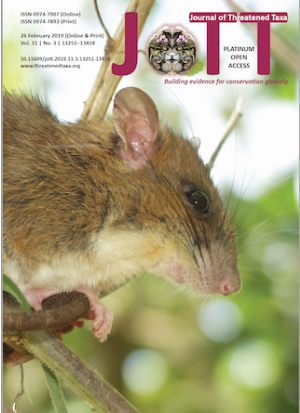
JoTT | 26 February
2019 | Vol. 11 | No. 3 | Pages: 13251–13418
Call for support for petition to save Gaza animals
Four Paws has launched an
international petition for the rescue of all animals at Gaza’s Rafah Zoo, which
has already been signed by more than 120000 people worldwide.
Four Paws is calling for the
final closure of the notorious zoo, which has been making headlines since the
beginning of the year.
Tourism bosses’ fears over Brexit impact on zoos
moving animals and birds
Banham Zoo and Africa Alive!
both send animals – as large as giraffes – on a regular basis to other zoos
abroad, ‘swapping’ different species and as part of their conservation breeding
programe.
Last week, for example,
Africa Alive! based at Kessingland sent two of its leopards and two kangaroos
to France and received two red river hogs, from France, for its new attraction
‘Hogsnorts’, opening at Easter.
Nature preserve on the Yangtze River will restore
biodiversity to a polluted area
Located on an island at the
mouth of the Yangtze River, the Shanghai Yangtze River Estuary Chinese Sturgeon
Nature Preserve will be a 427,000-sf facility comprising a dual-function
aquarium and research facility. The project will help rescue critically
endangered species and restore biodiversity to a habitat plagued by pollution.
The facility will include a
series of interior and exterior pools for breeding and raising both Chinese
sturgeon and finless porpoises. The pools will mimic the species’ natural
migration into waters of varying size and salinity. There will also be
dedicated facilities for research and to assist with reintegratio
Dust affects tooth wear and chewing efficiency in
chimpanzees
In a new study, Leipzig
researchers collected feces from chimpanzees living at Taï National Park, Ivory
Coast, and analyzed chewing efficiency during dry and rainy periods. They found
that increased dust loads during dry periods result in decreased chewing
efficiency. Moreover, dust affects tooth wear (surface texture) of the chimpanzees.
The researchers found that consumption of dust-covered foods created
micrometer-scale surface texture features (e.g. fine furrows and dales) on
cheek teeth, while at the same time, chewing was less intensive, resulting in a
lower number of chews per quantity ingested, and subsequently in larger mean
fecal particle sizes.
Chimpanzee 'high on drugs' starts eating his own arm
after drinking spiked liquid from a bottle tossed into his enclosure at a
Norwegian zoo
A chimpanzee started gnawing
at his own arm after consuming liquid containing drugs from a bottle that was
tossed into his enclosure in Norway.
Keepers became concerned when
they noticed Julius, a 39-year-old chimp, acting strangely at the Dyreparken
Zoo and Amusement Park near the southern city of Kristiansand.
A family visiting the zoo
told staff they had seen someone throw a bottle into the enclosure.
Keepers say it contained
narcotics wh
Cuddling a baby tiger or riding an elephant could
leave you more guilty than gratified, study says
Walking alongside a lion in
South Africa or feeding a baby tiger with a milk bottle at a roadside zoo
stateside as you smile into the camera might seem like a novel idea, but it
never has a good outcome for the animal. And increasingly, American travelers
are beginning to realize this, according to a new study.
The survey of 2,000 Americans
who have traveled outside of North America and the Caribbean in the last three
years found that ethical travel is on the rise, and it also found that when reflecting
on previous trips, a wide range of activities cause travelers to experience
“travel guilt.” Twenty-one percent of respondents put posing for photographs
with captive wildlife on their list of unethical activities they wouldn’t do
again. Eighteen percent had regrets about riding on elephants, and 19 percent
regretted swimming with dolphins.
An end to endings: how to stop more Australian species
going extinct
We need nature. It gives us
inspiration, health, resources, life. But we are losing it. Extinction is the
most acute and irreversible manifestation of this loss.
Australian species have
suffered at a disproportionate rate. Far more mammal species have become extinct
in Australia than in any other country over the past 200 years.
The thylacine is the most
recognised and mourned of our lost species, but the lesser bilby has gone, so
too the pig-footed bandicoot, the Toolache wallaby, the white-footed
rabbit-rat, along with many other mammals that lived only in Australia. The
paradise parrot has joined them, the robust white-eye, the King
Barcelona Zoo receives the highest citizen’s score
just as the City Council wants to reconvert it
FOUR PAWS CALLS ON AUTHORITIES TO STOP DECLAWING OF LIONS
AT GAZA ZOO
As the owner of Rafah Zoo in
Gaza plans to declaw more lions, international animal welfare organization Four
Paws has called on local authorities to put an end to this "cruel torture."
In January, a young lioness
named Falestine had her claws brutally removed with garden shears at Rafah Zoo
in the Gaza Strip so that "visitors and children to th
Lion kills owner in Czech Republic
A 34-year-old man has been
killed by his privately owned lion in the Czech Republic, news agency CTK
reported on Tuesday.
The roughly 8-year-old lion
and a lioness, who was pregnant and being held in the same cage, were shot by
police during the incident in the small eastern village of Zdechov.
https://www.dailytrust.com.ng/lion-kills-owner-in-czech-republic.html
FWC releases official report after trainer injured
during rhino incident at the Jacksonville Zoo
The official report has been
released after a zookeeper was attacked by a rhino at the Jacksonville Zoo and
Gardens last week.
The Florida Fish and Wildlife Conservation
Commission (FWC) released the report on Friday which details that the attack
may have been even more violent than previously reported.
Tigers wander through unlocked door at Jacksonville
Zoo
Two tigers at the
Jacksonville Zoo & Gardens wandered into a part of the tiger holding area
where they were not supposed to be.
It happened Feb. 24, two days
before a rhino injured a zookeeper with his horn.
Thousands of people watched
tiger cubs Rocky and Jagger on a live webcam in 2017.
Escaped Paignton Zoo horned goat-antelope back with
herd
A horned goat-antelope which
escaped from its enclosure at Paignton Zoo is back with its herd, staff say.
The young female West
Caucasian tur was spooked while vets were working with the animals on Monday,
the Devon zoo said.
The animal, which is a kind
of mountain goat, was in woodland inside the perimeter of the zoo before managing
to get into a neighbouring garden.
Staff said it was
tranquilized with a dart and returned to its enclosure.
Gorilla Ndume Now Has A Return Date To Cincinnati
Representatives from the zoo
will begin visiting Ndume at The Gorilla Foundation in California the week of
March 18 to prepare the silverback for transfer on May 13.
The zoo and the foundation
have been at odds over Ndume's fate, with the zoo filing suit for his return
late last year. In February, a federal judge in California ordered the gorilla
be returned to Cincinnati.
According to court documents,
zoo officials will begin crate training Ndume so he becomes comfortable with
the enclosure in which he'll be flown to Cincinnati. They'll also ensure he's
comfortable with
Caught in the crossfire – Tapirs in tiger territory
When we hear scientists
talking about accidental bycatch, we tend to think of turtles entangled in
fishing nets, or an albatross impaled on a longline trawler's fish hook.
A tapir in a tiger snare is
the terrestrial equivalent.
It is common knowledge that
the illegal trade in tiger bones and body parts poses a grave threat to the
remaining populations of Asia's most iconic big cat. But this grisly business
also has a detrimental impact on other species that have the misfortune to be
caught in the crossfire.
Kerinci Seblat National Park
in Indonesia is one of the last remaining strongholds of the critically
endangered Sumatran tiger. It also harbours a globally important population of
the endangered Malay tapir, which is down to an estimated 2,500 adults
worldwide.
You might imagine that a
sizeable, relatively defenceless herbivore would be perfect prey for a
voracious ape
Annual Report 2018
Asian Species Action Partnership (ASAP)
The surprising lives of Myanmar's logging elephants
There's something unique
about the logging industry in Myanmar. After a logger fells, say, one of the
country's numerous and valuable teak trees, the log is hauled by a captive
elephant. Wrapped in harnesses, owned by the state or private contractors,
these elephants are forced to engage in difficult labor under the guidance of
mahouts—elephant keepers, often referred to as "oozies" in
Myanmar—who ride astride the animal's neck.
Sounds cruel, right? Well,
yes and no. Elephants throughout history have had more than their fair share of
bad treatment at the hands of human beings. They've been used in wars,
compelled to perform tricks in circuses through the use of hooks and whips, and
they are "broken" so that they'll allow humans to ride them in
Thailand and other countries. Even in zoos,
The world's largest private rhino farm faces closure
due to a lack of funding
John Hume is the world's most
successful private rhino breeder. But the burly South African farmer now fears
his vast herd of endangered animals could be culled if he does not find the
funds he needs to keep his ranch open.
Last week, the retired
businessman wrote to MacKensie Bezos - the wife of Amazon founder Jeff Bezos -
to ask for cash as he has run out of money to continue caring for his herd of
over 1,500 animals.
“Her husband is the richest
man in the world and when she is divorced she will have plenty, and she seems
to be a decent person. Maybe she will help save our rhino," said Mr Hume,
77.
After a successful career
running a holiday time-sh
Shedd Expands Conservation Research Team to Preserve
Freshwater, Marine Biodiversity
Three new research biologists
joined the conservation research team at Shedd Aquarium, bringing new areas of
expertise in freshwater and marine ecosystems to the aquarium’s Daniel P.
Haerther Center for Conservation and Research. The biologists – Dr. Austin
Happel, Dr. Kentaro Inoue, and Dr. Lynn Waterhouse – are set to study aquatic
wildlife in urban settings, freshwater mussels in the Great Lakes region and
fishes in The Bahamas, respectively. With the continued expansion of the
Haerther Center, Shedd aims to study and protect more aquatic animals and their
ecosystems.
Bornean Banteng Action Plan for Sabah
Zookeepers Testify at Trial on Elderly Captive
Elephants
Describing instances where
they had to discipline two Asian elephants that have lived for decades a
Massachusetts zoo, current and former workers testified Monday that they used
the minimum force necessary to curb bad behavior.
“She swung her trunk on us,
so we laid her down for time out,” Shelley Avila-Martins said of Emily, the
older and larger of the Buttonwood Park Zoo’s two pachyderms. “That’s what I
was taught to do. It’s like giving my kid a time out and making him sit in a
chair.”
Avila-Martins, who works now
as an animal-cont
Eating the flu
Given the importance and wide
distribution of Influenza A viruses, it is surprising how little is known about
infections of wild mammals. A new study led by Alex D. Greenwood and Gábor Á.
Czirják of the Leibniz Institute for Zoo and Wildlife Research (Leibniz-IZW) in
Berlin sheds light on which species are commonly infected and why. The
scientists detected virus exposure among wild African mammals in Namibia and
demonstrated that the most important factor for influenza A virus diversity and
prevalence is a diet containing birds. Species relationship or sociality play
surprisingly small roles. The results have been published in The Journal of
Infectious Diseases.
From Mike I to Mike VII: the history of LSU's live
mascots
Mike the Tiger’s status as a
bachelor with one sweet crib has mostly been solidified since the completion of
several additions to his enclosure in 2017. But in 1945, Mike I had a fateful
encounter with a tiger femme fatale.
According to the book “Mike
the Tiger: The Roar of LSU,” a student body vote declared the majority thought
Mike I needed to prove his manhood and produce cubs. Soon after, Mike I was on
his way to a zoo in Jackson to meet his potential mate, Desdemona.
Cuddling a baby tiger or riding an elephant could
leave you more guilty than gratified, study says
Walking alongside a lion in
South Africa or feeding a baby tiger with a milk bottle at a roadside zoo
stateside as you smile into the camera might seem like a novel idea, but it never
has a good outcome for the animal. And increasingly, American travelers are
beginning to realize this, according to a new study.
The survey of 2,000 Americans
who have traveled outside of North America and the Caribbean in the last three
years found that ethical travel is on the rise, and it also found that when
reflecting on previous trips, a wide range of activities cause travelers to
experience “travel guilt.” Twenty-one percent of respondents put posing for
photographs with captive wildlife on their list of unethical activities they
wouldn’t do again. Eighteen percent had regrets about riding on elephants, and
19 percent regretted swimming with dolphins.
Fifty-seven percent of
respondents said the
China moves to protect endangered marine life
From campaigns to reject
wildlife products, to the celebrated "retirement" of two belugas from
aquariums, Chinese society has been making positive efforts in protecting the
world's marine biodiversity.
World Wildlife Day 2019,
which fell on March 3, aims to "raise awareness about the extraordinary
diversity of marine life and the crucial importance of marine species to
sustainable development," according to Antonio Guterres, UN
secretary-general.
Chinese actor Eddie Peng
joined WildAid, a non-profit organization which focuses on reducing market
demand for endangered species products, to call for more people in China to
play their part in protecting the oceans and endangered sea turtles.
"Don't be fooled by the
beauty of hawksbill products, because they all come from illegal and
devastating trade," said Eddie Peng in the campaign
32.Vertical Line in Conservation Sector
The Conservation Sector (free-range koalas)
Support & Resistance
amongst different organisations
These represent side-to-side
movements in the conservation sector and outside of other groups such as
commercial entities
There so many ways in which
you can interpret situations across different geographic, political and
cultural lines. There is no one-stop-shop for major problems in Australia, BUT,
there are structures and formulas that can be implemented to ensure a better
future for all Australians, include our native species.
Endangered macaws reintroduced to Brazil
The Loro Parque Foundation
has released six Lear's Macaws in Caatinga habitat in north-eastern Brazil. The
macaws were raised in Tenerife and are one of nine species the Foundation has
been able to save from imminent extinction, thanks to its funding of in-situ
and ex-situ conservation projects. The six birds were moved from Tenerife to
Brazil last August and have already settled in to their new home, and are
flying free in the wild.
With help from the
Foundation, Lear's Macaw has recently been reclassified as Endangered, having
previously been Critically Endangered. The organisation was handed two pairs by
the Brazilian Government in 2006 and have gone on to release birds back into
the wild, after helping captive bir
An end to endings: how to stop more Australian species
going extinct
We need nature. It gives us
inspiration, health, resources, life. But we are losing it. Extinction is the
most acute and irreversible manifestation of this loss.
Australian species have
suffered at a disproportionate rate. Far more mammal species have become
extinct in Australia than in any other country over the past 200 years.
The thylacine is the most
recognised and mourned of our lost species, but the lesser bilby has gone, so
too the pig-footed bandicoot, the Toolache wallaby, the white-footed
rabbit-rat, along with many other mammals that lived only in Australia. The
paradise parrot has joined them, the robust white-eye, the Ki
*****************************************************
** ***
** **
***
*
New Meetings and Conferences updated Here
If you have anything to add then please email me at elvinhow@gmail.com
I will include it when I get a minute. You know it makes sense.
Vacancies in Zoos and Aquariums and Wildlife/Conservation facilities around the World
After more than 50 years working in private, commercial and National zoos in the capacity of keeper, head keeper and curator Peter Dickinson started to travel. He sold house and all his possessions and hit the road. He has traveled extensively in Turkey, Southern India and much of South East Asia before settling in Thailand. In his travels he has visited well over 200 zoos and many more before 'hitting the road' (many more before that) and writes about these in his blog http://zoonewsdigest.blogspot.com/
Peter earns his living as an independent international zoo consultant, critic and writer. Currently working as Curator of Penguins in Ski Dubai. United Arab Emirates. He describes himself as an itinerant zoo keeper, one time zoo inspector, a dreamer, a traveler, an introvert, a people watcher, a lover, a storyteller, a thinker, a cosmopolitan, a writer, a hedonist, an explorer, a pantheist, a gastronome, sometime fool, a good friend to some and a pain in the butt to others.
"These are the best days of my life"
 | |
Peter Dickinson
Independent International Zoo Consultant
|
|
|